Kenya costs less and gets you to the point faster. Tanzania gives you more a longer migration season, plus the Ngorongoro Crater, which Kenya has no real equivalent for. That is the actual trade-off behind the question, and it does not resolve to one clear winner.
On Gotukio you can book safaris across both countries every month. For a 2027 trip, budget at least 5 to 6 nights in Kenya or 6 to 7 nights in Tanzania to do either country justice on its own. Combining both properly needs 10 to 12 nights, covered further down.
This guide breaks down cost, migration timing, and real itineraries for both countries, including the routes most travelers skip, so you can decide based on your dates and budget.
Kenya vs Tanzania at a Glance
Factor | Kenya | Tanzania |
Known for | Masai Mara river crossings, private conservancies | Serengeti's scale, Ngorongoro Crater |
Typical daily cost (mid-range) | $350-550 per person | $400-650 per person |
Flight hub | Nairobi (JKIA), with extensive direct flights from Europe | Kilimanjaro (JRO) or Zanzibar (ZNZ), with fewer direct routes |
Visa | eTA, roughly $34 | eVisa, $50 (most nationalities) or $100 (US citizens) |
Beach add-on | Diani, Watamu, Lamu | Zanzibar |
Best for | Shorter trips, first-timers wanting variety fast | Longer trips, travelers wanting more space and fewer vehicles per sighting |
Minimum recommended time | 5-6 nights | 6-7 nights |
Wildlife and the Great Migration: Kenya vs Tanzania
Both countries share the same migration, which is really one continuous loop through the Serengeti-Mara ecosystem, not two separate events. Roughly 1.5 million wildebeest and several hundred thousand zebras move in a clockwise circuit that spends most of the year in Tanzania and only a few months in Kenya.
From December to March, the herds are in southern Tanzania's Ndutu and Serengeti plains for calving season, when up to 8,000 wildebeest calves are born per day at the peak. By June, they've moved north through the western Serengeti. From July through September, they cross into Kenya's Masai Mara, which is when most of the dramatic Mara River crossing footage you've seen gets filmed and by November, they're heading back south into Tanzania.
This means Kenya's migration window is genuinely shorter, concentrated into roughly three to four months. Tanzania has the migration on its soil for the other eight to nine months, plus the calving season, which many experienced safari-goers actually rate higher than the river crossings for predator action, since newborn calves draw in lions, hyenas, and cheetahs in large numbers.
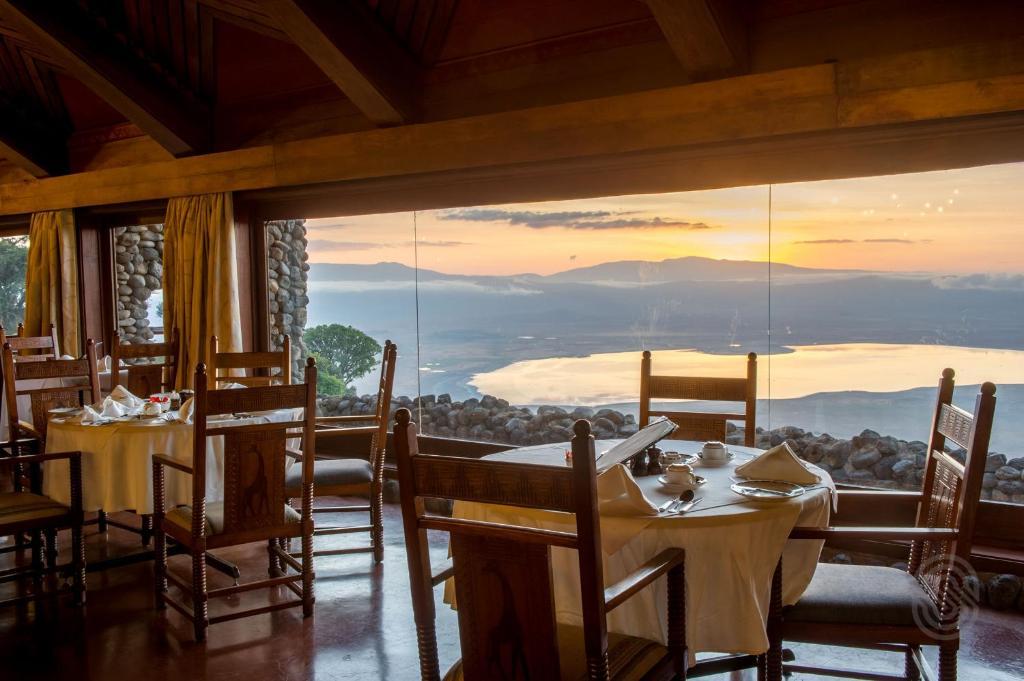
Outside the migration, both countries deliver strong year-round Big Five viewing. The Masai Mara and its surrounding conservancies (Mara North, Olare Motorogi, Naboisho) hold resident lion and leopard populations that don't depend on the migration at all. The Serengeti has similar year-round density, and Ngorongoro Crater is one of the most reliable places on the continent to see black rhino alongside dense lion prides, all within a single, contained caldera.
Kenya Safari: Pros and Cons
Pros
More affordable across every tier, from budget camping to luxury lodges
Genuine variety within a short distance: Amboseli's elephant herds, Samburu's arid-country species, and Tsavo's red-elephant country are all within a few hours of Nairobi, on top of the Masai Mara
Extensive direct flight options from London, Amsterdam, Paris, and the Middle East hubs
Private conservancies, not only around the Masai Mara but also in Laikipia and around Amboseli, offer exclusive game drives, night drives, and walking safaris that aren't allowed inside the national parks and reserves themselves
Easy to combine with a coastal add-on at Diani, Lamu or Watamu
Cons
The Masai Mara's peak season (July to September) gets genuinely crowded at popular river crossing points
Masai Mara entry fees jump from $100 to $200 per person per day from July 1, which materially affects trip cost
Wildlife density drops off outside the Mara, Amboseli, and the main conservancies; Tsavo and Meru see noticeably fewer animals per square kilometer, though they're far quieter and cheaper as a result
Tanzania Safari: Pros and Cons
Pros
The Serengeti's scale means fewer vehicles per sighting, even in peak season, compared to the Mara
Ngorongoro Crater packs an unusually high density of wildlife, including reliable black rhino sightings, into one compact area
Beyond the northern circuit, Tarangire has some of Africa's largest elephant herds and Ruaha in the south holds one of the continent's biggest lion populations, both with a fraction of the Serengeti's visitor numbers
Longer migration season overall, plus a calving season most first-timers don't know to ask for and many repeat visitors rate higher than the crossings
Zanzibar is a strong beach add-on, with direct European flights increasing each year
Cons
Generally 15-30% more expensive than Kenya at the same comfort tier, largely due to park and concession fees
Fewer direct international flights; many routes connect through Nairobi, Amsterdam, or Doha into Kilimanjaro
The Ngorongoro Conservation Area charges a separate, non-negotiable vehicle descent fee to enter the crater itself, on top of the daily conservation fee
The southern circuit parks (Ruaha, Nyerere) require a light aircraft charter rather than a road transfer from Arusha, which adds cost if you want to see them on the same trip as the north
Tanzania is not covered by the East Africa Tourist Visa, so it needs a separate visa even if you already hold one for Kenya, Uganda, or Rwanda
Best Time to Visit: Kenya vs Tanzania
Month | Kenya | Tanzania |
January | Excellent; Dry, low crowds | Excellent; calving season begins in Ndutu |
February | Excellent; Dry, low crowds | Excellent; peak calving, dense predator action |
March | Good; Dry, low crowds | Good; calving continues, light rains start |
April | Good; green season, low crowds | OK; long rains, herds on the move |
May | Poor due to long rains | Good; green season, low crowds |
June | Good; migration approaching, not peak | Excellent; migration crosses western Serengeti |
July | Good; early Mara crossings | Excellent; herds reach northern Serengeti/Mara border |
August | Good; peak river crossings | Excellent; herds concentrated near the Mara River |
September | Excellent; peak river crossings | Good; herds still active near the border |
October | Good; migration starts moving south | Good; migration heading south |
November | Good; short rains, quieter | Good; short rains, herds returning south |
December | Good; quieter, strong resident game | Excellent; herds back in southern Serengeti, calving starts |
These ratings track the Masai Mara and Serengeti-Ngorongoro migration circuit especially, since that's what most people mean by "best time to visit." Outside the migration, the picture shifts. Kenya's Amboseli, Tsavo, and Samburu stay rewarding for most of the year since they don't depend on the migration, and are best in the dry months (June to October, plus January and February) when animals concentrate around permanent water. Tanzania's southern circuit (Ruaha, Nyerere) runs on the same dry season calendar (June to October is peak there too), but many camps close entirely from March to May, when the north's long rains hit hardest.
For Kenya Safari Seasons Explained, the dry vs. green season breakdown goes deeper into what "Good" and "OK" actually look like on the ground month by month.
How Much Does a Kenya Safari Cost vs a Tanzania Safari?
Prices below are indicative per person per day, based on double occupancy, and will vary by operator, lodge, and season. They're a useful planning baseline, head to our itinerary builder to get a full instant quote for your dates and specific itinerary.
Tier | Kenya (per person/day) | Tanzania (per person/day) | What you get |
Budget | $150-250 | $200-300 | Camping or budget lodges, shared group vehicle, park fees often extra |
Mid-range | $350-550 | $400-650 | Tented camps, private vehicle and guide, most fees included |
Luxury | $700-1,500+ | $800-2,000+ | Exclusive-use conservancy or concession camps, private guiding, full board |
Tanzania runs higher mainly because its northern circuit parks (Serengeti, Ngorongoro, Tarangire) have fewer budget accommodation options inside the parks themselves, and because the Ngorongoro Conservation Area layers a conservation fee, a vehicle fee, and a separate crater descent fee on top of each other.
Park and entry fees (non-resident adult, per day unless noted). 2027 rates were not yet published when this was written; figures below are the latest confirmed 2026 rates, which typically carry over or rise slightly the following year:
Fee | Kenya | Tanzania |
Flagship park/reserve | Masai Mara: $100 (Jan-Jun), $200 (Jul-Dec) | Serengeti: roughly $85 |
Second-tier park | Amboseli/Lake Nakuru: $100 | Ngorongoro: roughly $75, plus a separate ~$300 vehicle descent fee to enter the crater |
Budget-tier park | Tsavo East/West, Nairobi NP: $80 | Tarangire/Lake Manyara: roughly $60 |
Visa | eTA: ~$34 | eVisa: $50 (most nationalities), $100 (US citizens) |
Both countries also charge separately for balloon safaris (roughly $450–600 per person in either country), guided walks, and night drives where permitted. For the full year-by-year breakdown across both countries, see The Tukio Safari Pricing Index 2026: Kenya & Tanzania.
Popular Kenya Safari Itineraries
Kenyan Classics
This is the itinerary most first-time Kenya travelers end up booking, and there's a reason it works and you can combine Kenyan flagship sights in one trip. You start in Amboseli National Park, where Mount Kilimanjaro sits on the horizon behind some of the last big-tusker elephant herds in Africa, giving you the single most photographed backdrop in East African safari. From there, the route drops down to Lake Naivasha for a change of pace, a boat ride among hippos and fish eagles, and a chance to stretch your legs on foot among zebra and giraffe, something you can't do in most game reserves, while trip closes in the Masai Mara, Kenya’s most famous park. This itinerary can be done both ways round, and you can also conveniently add a stop in Nairobi between Naivasha and Amboseli if you want to experience a bit of the city life.
The logic here is simple: it opens with an iconic, easy-access park, gives you a breather in the middle, and saves the best wildlife density for last. View this itinerary
7-Night Kenya Luxury Safari with the Safari Collection
For travelers who want fewer stops but a higher standard at each one, this route starts at Giraffe Manor, where Rothschild giraffes put their heads through the breakfast room windows, then flies to Samburu for a genuinely different ecosystem, home to species you won't see further south, like Grevy's zebra and the reticulated giraffe. A stop at Solio Conservancy follows, one of the most reliable rhino-tracking destinations in Kenya, before finishing at Sala's Camp in the Masai Mara for classic Big Five game drives. Every leg is a short charter flight, so you spend your time on game drives, not roads. View this itinerary
Underrated Kenya Safari Itineraries
Kenyan Alternative Route
Most first-time visitors go straight to the Mara and never see Kenya's north, which is a mistake if you've already done a classic safari or want something less photographed. This route runs through Samburu, Lake Nakuru, and finishes in the Masai Mara, giving you the arid, rugged Samburu ecosystem (Grevy's zebra, Somali ostrich, gerenuk) before the more familiar Mara finale. It's a genuinely different visual experience from a standard Kenya trip, and because Samburu sees a fraction of the visitor traffic the Mara does, you'll often have sightings to yourself. View this itinerary
Kenya Budget Safari
This one skips the Masai Mara entirely, and that's the point. Starting in Nairobi and running through Tsavo East and Tsavo West, it targets Kenya's largest protected wilderness area, home to the "red elephants" that dust-bathe in Tsavo's red volcanic soil, plus healthy lion and buffalo populations. Because Tsavo's entry fees sit at the lower "Wilderness" KWS tier ($80/day versus the Mara's $100-200), and because it's a two to three-hour drive from Nairobi rather than a domestic flight or long drive, this is consistently one of the most affordable ways to safari in Kenya without camping. Make it a circuit ending in Nairobi, or choose to end in Diani for a relaxing beach stay. View this itinerary
Popular Tanzania Safari Itineraries
Bush to Beach Tanzania Classics
This is Tanzania's answer to Kenya's classics run, and it's the itinerary most travelers land on for a reason. It opens in the Ngorongoro Crater, descending into the world's largest intact volcanic caldera for a single, dense day of Big Five viewing, including some of the continent's most reliable black rhino sightings. From there, the route moves into the Serengeti for the open plains and, depending on timing, the migration itself. The trip closes on Zanzibar, adding four or five days of beach time after the game drives. It's the itinerary that best captures why people choose Tanzania: scale, density, and a proper beach finish. View this itinerary
Underrated Tanzania Safari Itineraries
Ruaha and Zanzibar (Southern Circuit)
Almost every Tanzania itinerary runs the Northern Circuit, but there is a lot more to Tanzania. Ruaha National Park, Tanzania's largest, sits in the country's south and sees a fraction of the visitors the Serengeti does, despite holding one of East Africa's largest elephant populations and strong lion and wild dog numbers. Because Ruaha isn't part of the migration circuit, park fees run lower and camps run quieter, meaning you can go days without seeing another vehicle at a sighting. Pairing it with Zanzibar at the end gives you the same beach payoff as the Northern Circuit route, just without the crowds getting there. View this itinerary.
Tarangire and Lake Manyara (Budget Northern Circuit)
If the Serengeti's price tag is the thing putting you off Tanzania, this route is the workaround. It covers Tarangire (huge elephant herds and ancient baobabs) and Lake Manyara (tree-climbing lions, flamingos) and you can easily add the Ngorongoro Crater descent with an extra day without the Serengeti leg, which is both the longest drive and the most expensive park fee on a typical Northern Circuit trip. At around four nights, it's one of the shortest and most affordable ways to experience Tanzania's Northern Circuit highlights, and it can still include the crater, which most travelers rate as the single best day of any Tanzania trip. View this itinerary.
Can You Combine Kenya and Tanzania in One Trip?
Yes, and a lot of travelers do, since the two countries share a land border at Namanga and the migration itself doesn't respect it either.
Start in Nairobi, head to the Mara and then cross over to the Serengeti for your typical Cross border migration safari. For a longer stay, we recommend adding either Lake Naivasha or Lake Nakuru for the full experience. As the border crossing by road can be long, especially for smaller groups we recommend opting for the flight instead. View this itinerary
Gotukio's Cross-Border Safari itinerary recommendation offers an alternative route that combines both countries: it opens in Amboseli for Kilimanjaro views, crosses into Tanzania through Lake Manyara, continues to the Serengeti for the migration, and finishes at Ngorongoro Crater. View this itinerary
The trade-off is time and visas. You'll need both the Kenya eTA and a separate Tanzania visa, since Tanzania isn't covered by any joint East Africa visa arrangement. Budget at least 10 to 12 nights to do both countries properly without feeling rushed, and expect a half-day built into the itinerary for the border crossing itself if you're going overland rather than flying between the two.
Getting There: Flights and Visas
Kenya. Most international flights land at Jomo Kenyatta International Airport (JKIA) in Nairobi, which has extensive direct connections from London, Amsterdam, Paris, and the major Gulf hubs (Doha, Dubai), plus growing direct US routes. From Nairobi, it's a 45-minute domestic flight to most Mara airstrips, or a 5- to 6-hour drive. Kenya requires an electronic Travel Authorization (eTA), roughly $34 including the service fee, applied for online before departure and valid for a single entry.
Tanzania. Most Northern Circuit trips fly into Kilimanjaro International Airport (JRO), near Arusha, with fewer direct long-haul options than Nairobi; many routes connect through Amsterdam, Doha, or Nairobi itself. Zanzibar's airport (ZNZ) has a growing number of direct European flights if your trip is beach-first. Tanzania requires a separate eVisa, $50 for most nationalities or $100 for US citizens (valid 12 months, multiple entry), applied for online at visa.immigration.go.tz. If your trip includes Zanzibar, factor in the mandatory Zanzibar travel insurance, around $44, which catches a surprising number of travelers off guard at check-in.
How to Book Your Kenya or Tanzania Safari
However you land on Kenya, Tanzania, or both, you generally have four routes to booking: a local ground operator in-country, an international travel agent who marks up a local operator's itinerary, a fully self-drive trip (workable in Kenya, harder in Tanzania's more remote parks), or an online multi-operator platform that lets you build and price the trip yourself.
Ready to start planning? On Gotukio you can build your custom Kenya or Tanzania safari in minutes: real itineraries, transparent pricing, no waiting for quotes. Start building your safari →
Tips for Choosing Between Kenya and Tanzania
If your dates are fixed to July-September and you want to guarantee river crossing chances, lean Kenya. The Mara's crossings are more concentrated and predictable in that window than the Serengeti's northern sector.
If you can travel in February, Tanzania's Ndutu calving season gets a fraction of the July to September crowds, with newborn calves drawing dense predator activity.
Book a Masai Mara conservancy stay, not the main reserve, if you're traveling during peak crossing weekends. Conservancies cap vehicle numbers per sighting, so you avoid the 20-vehicle pile-ups that can happen at popular crossing points in the reserve itself.
If you're routing into the Serengeti via Ngorongoro, you'll pay the Ngorongoro transit fee (around $75 per adult) even if you're not stopping at the crater. Build it into your budget either way.
Flying rather than driving between Nairobi and the Mara saves a full travel day each way in peak season, when road traffic out of Nairobi can add hours to what should be a 5-hour drive.
If cost is the deciding factor, Kenya's Tsavo parks and Tanzania's Tarangire-Ngorongoro-Manyara routing (skipping the Serengeti) are the two cheapest genuinely good safari experiences in either country.
Remember that a Kenya eTA and a Tanzania visa are two separate applications with two separate fees. Apply for both at least three to four weeks before departure.
Kenya vs Tanzania: Our Verdict
Choose Kenya if: this is your first safari, you have 5 to 7 nights, you want more accommodation choice at every price point, or you're set on traveling in July, August, or September specifically for river crossings.
Choose Tanzania if: you have 7+ nights, you want fewer vehicles per sighting even at peak season, you're drawn to the Ngorongoro Crater specifically, or you can travel outside the July-September window and want to catch calving season instead.
Choose both if: you have 10+ nights and want to see the full migration ecosystem rather than one slice of it. The Cross-Border Safari route above is built for exactly this.
Planning a Kenya or Tanzania safari? Build your trip at gotukio.com; browse verified itineraries, see transparent pricing, and book online in minutes.
Frequently Asked Questions
Is Kenya or Tanzania better for a first safari?
Kenya is generally the easier first safari, mainly because of shorter internal distances and more direct international flights. You can cover two or three distinct ecosystems (Amboseli, Naivasha, the Mara) in a single 7-night trip without excessive travel time. Tanzania rewards a bit more time, since its parks are larger and further apart, but the Ngorongoro Crater alone is worth the trip for many first-timers.
Is Tanzania more expensive than Kenya?
Yes, generally by around 15-30% at the same comfort tier. This comes down to park and conservation fees, particularly the Ngorongoro Conservation Area's layered fee structure, and fewer budget accommodation options inside Tanzania's core Northern Circuit parks compared to Kenya's range of camps and lodges around the Mara.
Can I see the Great Migration in both Kenya and Tanzania?
Yes, since it's one continuous migration, not two separate events. It's in Tanzania for roughly eight to nine months of the year (including calving season, December to March) and crosses into Kenya's Masai Mara from roughly July to October for the river crossings most people picture when they think of the migration.
Do I need a visa for both Kenya and Tanzania?
Yes, and they're entirely separate applications. Kenya requires an eTA (roughly $34), and Tanzania requires its own eVisa ($50 for most nationalities, $100 for US citizens). Tanzania is not covered by the East Africa Tourist Visa that covers Kenya, Uganda, and Rwanda, so holding one of those doesn't get you into Tanzania.
Can I combine a Kenya and Tanzania safari in one trip?
Yes. The two countries share a land border and the migration itself, so combining them is common and logistically straightforward, either overland via the Namanga border or by flying between hubs. Budget at least 10 to 12 nights to do both properly.
Which is safer, Kenya or Tanzania?
Both countries have well-established, safety-conscious safari industries, and the parks themselves are low-risk environments when you're with a licensed guide. For destination-specific detail, see our safety guides for Kenya and Tanzania, which cover practical safety questions beyond wildlife, including road travel and city safety in Nairobi and Arusha.
Is the Masai Mara or Serengeti better for the Great Migration?
It depends on timing. The Masai Mara is better from July to October specifically for the dramatic river crossings. The Serengeti is better from December to June, including the calving season in the south (Ndutu), which many repeat safari-goers rate as more rewarding for predator sightings than the crossings themselves.
Do I need to book park permits or entry fees in advance?
Most Kenya and Tanzania park fees are paid electronically by your operator as part of your safari cost and don't require separate advance booking by you. The exception is Masai Mara conservancy stays and popular Ngorongoro Crater lodges in peak season (July-September, December-February), which can sell out months ahead, so book those accommodations early even if the park fee itself is handled closer to your travel date.
Ready to start planning? On Gotukio you can build your custom Kenya or Tanzania safari in minutes: real itineraries, transparent pricing, no waiting for quotes. Start building your safari →
Join the GoTukio Travel Club!
Receive exclusive inspiration and deals for your next trip.