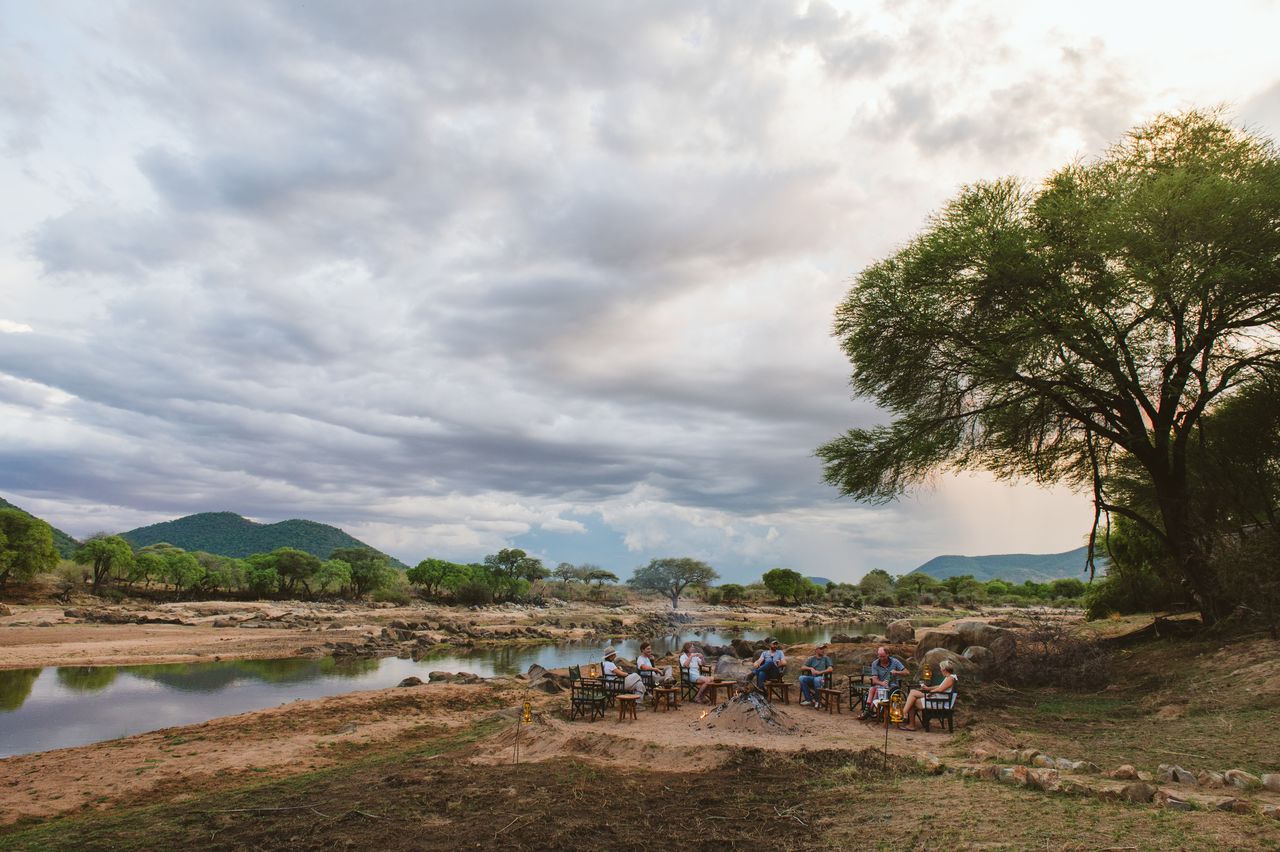
Most people planning a Tanzania safari end up in the same three parks: Serengeti, Ngorongoro, Tarangire. They are excellent but they are also busy, well-trodden, and priced accordingly. The southern circuit is what exists when you subtract the crowds: a chain of parks stretching south and west of Dar es Salaam where you can do boat safaris on the Rufiji River, track wild dogs on foot in Ruaha, and spend full days in the bush without seeing another vehicle. The wildlife is just as good and the prices at camp level are often lower.
In this guide we cover the three parks that form the practical heart of the southern circuit: Nyerere National Park (the vast wilderness formerly known as the Selous), Mikumi National Park (the easy-access giant that borders it), and Ruaha National Park (the remote, raw, and deeply special frontier to the west). We'll tell you how to combine them with each other, how to bolt them onto a Zanzibar beach holiday, how much it all costs, and which camps make the trip worth every dollar.
Based on Gotukio's experience booking safaris across Tanzania, and informed by our operator partners on the ground, the sweet spot for a southern circuit trip is 8 to 12 days, which gives you time in at least two parks and a few nights on Zanzibar's beaches on either end.
Why Choose Tanzania's Southern Circuit?
There is a version of a Tanzania safari that almost nobody tells you about when you start researching: the one where the guide stops the vehicle in the middle of the bush for a walking safari, where you track elephant on foot along a dry riverbed, where you take a boat downstream through hippo pods at sunset without another vessel in sight.
That is the southern circuit.
Here is what makes it genuinely different from the north:
✅ Fewer crowds. Nyerere covers over 30,000 square kilometres, bigger than Denmark, and sees a fraction of the visitor numbers that the Serengeti does. You will not share a sighting with fourteen other vehicles.
✅ Activities beyond game drives. Nyerere is one of very few Tanzanian parks where you can do boat safaris, walking safaris, and fly-camping in the same trip. Ruaha offers night game drives. These experiences are impossible or heavily restricted in most northern parks.
✅ Wild-dog territory. The southern circuit holds some of Africa's best African wild dog populations. If that is on your list, this is where you come.
✅ Fly-in accessibility from Zanzibar. Zanzibar to Nyerere is under an hour by light aircraft. Zanzibar to Mikumi is about the same. The beach-and-bush combination practically writes itself.
✅ Better value at the camp level. Several excellent mid-range and luxury camps in the south are priced more competitively than equivalent properties in the northern circuit, particularly outside peak season.
❌ You need to fly between parks. The distances are significant. Ruaha to Nyerere by road is a punishing 450km journey, most serious visitors fly the inter-park legs, which adds cost.
❌ The rains close things down hard. Most camps in Ruaha close entirely from mid-March to May. Plan your timing carefully.
❌ Less infrastructure overall. The southern circuit is not a beginner circuit in the logistical sense. If you want roads between comfortable towns and lodges visible from the highway, go north. If you want wilderness, come south.
❌ No Great Migration. If the Serengeti wildebeest crossing is non-negotiable for you, combine it with a southern circuit extension rather than replacing it.
The Three Parks: What Makes Each One Unique
Nyerere National Park: Tanzania's Biggest Wild Secret
Nyerere (you will often still see it called by its former name, the Selous Game Reserve) was renamed in 2019 to honour Julius Nyerere, Tanzania's first president. The northern section that is open to tourism covers roughly 5,000 square kilometres, still enormous, still lightly visited, and anchored by the broad, brown Rufiji River and its ox-bow lakes.
What Nyerere does better than almost anywhere else in East Africa is water-based wildlife viewing. A morning boat safari along the Rufiji, drifting past basking crocodiles and wallowing hippo pods while a fish eagle circles overhead, is the kind of experience that doesn't fit in a game-drive vehicle. It is quieter, closer, and often produces sightings you simply cannot replicate on land.
The park holds healthy elephant herds, large lion prides, buffalo in the thousands, and if you are lucky the African wild dog. The birdlife along the river is exceptional year-round. Wildlife concentrates dramatically during the dry season (June to October) when the Rufiji and its tributaries become the only reliable water source across a vast, baked landscape.
Best for: Boat safaris, walking safaris, first-time southern circuit visitors, travellers coming from Zanzibar.
Mikumi National Park: The Southern Circuit's Most Accessible Park
Mikumi occupies a strange and wonderful position in Tanzania's safari landscape: it is only about 300km from Dar es Salaam and directly accessible by road, train or by a short charter flight from Zanzibar (around 50 to 70 minutes), yet most international visitors skip it entirely in favour of more famous names.
The Mkata Plain, Mikumi's flat open grassland, draws frequent comparisons to the Serengeti. The wildlife density here is remarkable for a park of this size. Elephants, buffalo, zebras, giraffes, and lions are consistently seen, and Mikumi is one of the most reliable parks in Tanzania for spotting tree-climbing lions. The park's famous hippo pool, right near the main gate, is one of the easiest big-animal encounters in the country.
Mikumi also serves as the natural gateway between Nyerere (to the south-east) and Ruaha (to the west). Many well-designed southern circuit itineraries use Mikumi as a comfortable first night after flying in, before continuing deeper into the wilderness.
Best for: First-time safari visitors, short trips from Zanzibar, budget-conscious travellers, families.
Ruaha National Park: Tanzania's Last True Frontier
Ruaha is the one that safari veterans talk about in near-reverent terms. It is Tanzania's second-largest park, stretching across more than 20,000 square kilometres of semi-arid miombo woodland, baobab country, and rocky escarpment along the Great Ruaha River. It is remote, it is dramatically beautiful, and it holds the kind of wildlife concentrations that remind you what Africa looked like before tourism scaled up.
The park's elephant population is one of the largest in East Africa, herds of 200 animals are not unusual during the dry season. Ruaha also holds Tanzania's densest lion population (it is estimated to hold around 10% of Africa's total lion population), plus cheetah, leopard, wild dog, and the full southern Africa suite of antelope species like greater kudu, roan, and sable, species you simply will not see in the northern circuit.
Night game drives in Ruaha are legal and genuinely thrilling. Walking safaris with armed rangers take you into riverine forest and open bush. The sense of space and solitude here is unlike anything on the more-travelled safari map.
Best for: Experienced safari-goers, wildlife photographers, anyone prioritising genuine wilderness, walking safari enthusiasts.
Best Time to Visit the Southern Circuit
The southern circuit parks follow a broadly similar seasonal pattern, though there are nuances worth knowing, particularly around Ruaha, which is more dramatically seasonal than Nyerere or Mikumi.
Month | Nyerere | Mikumi | Ruaha | Notes |
January | Good | Good | Good | Warm, some rain; birdlife excellent |
February | Good | Good | Good | Similar to Jan; approaching long rains |
March | OK | OK | Poor | Long rains begin; Ruaha can be inaccessible |
April | Poor | Poor | Closed | Most Ruaha camps shut; heavy rain |
May | Poor | Poor | Closed | Parks accessible but not recommended |
June | Good | Good | Good | Rains end; wildlife concentrating; Ruaha reopens |
July | Excellent | Excellent | Excellent | Peak season begins; game viewing superb |
August | Excellent | Excellent | Excellent | Peak season; large animal concentrations |
September | Excellent | Excellent | Excellent | Possibly the best month across all three parks |
October | Excellent | Excellent | Excellent | Peak continues; walking safaris at their best |
November | Good | Good | Good | Short rains may arrive late Nov; landscapes green |
December | Good | Good | Good | Early rains; great birding; lower prices |
The dry season (June to October) is the best time to visit across the board. Wildlife concentrates around the Rufiji River, Ruaha River, and Mikumi's water sources. Vegetation is low, so visibility is excellent. Days are warm and sunny, nights are cool. Most safari veterans consider September and October the outstanding sweet spot: wildlife viewing is at its peak, crowds are slightly lower than July and August, and some camps offer late-season rates.
January and February is a solid shoulder season. The short dry spell after the short rains produces good wildlife viewing with far fewer visitors and meaningfully lower prices, particularly at luxury camps in Ruaha, which can drop rates significantly to fill beds.
November and December is green and birdy. The short rains usually arrive in mid-to-late November and bring migrant birds from Europe and Asia. Game viewing is still good; conditions are photogenic; camps are quieter.
March to May (long rains) is when to stay away. Most Ruaha camps close entirely from mid-March through to the end of May. Mikumi and Nyerere remain open but road conditions deteriorate and some areas become unreachable.
How Much Does a Southern Circuit Safari Cost in 2026?
The southern circuit is not a budget circuit. The combination of fly-in access, smaller camps, and remote locations pushes the starting price higher than the northern circuit's road-based options. That said, the camps you stay in and the wildlife experiences you get represent genuinely excellent value for money at the mid-range and above.
Here is a realistic per-person-per-day breakdown for a southern circuit safari in 2026, assuming two travellers sharing:
Category | Per person per day | What you get |
Budget | $350 to $500 | Basic tented camp, shared vehicle, road access where possible, basic meals |
Mid-range | $500 to $800 | Quality tented camp (like Hodi-Hodi or Vuma Hills), private vehicle and guide, all meals, game drives |
Luxury | $800 to $1,500+ | Premium camps (like Ruaha River Lodge or Stanley's Kopje), all-inclusive, private activities, fly-in transfers |
A few important caveats:
Inter-park flights add $150 to $650 per person per leg depending on the route and carrier. A Zanzibar–Nyerere–Ruaha–Zanzibar routing might involve three flight legs totalling $500 to $1500 per person in air costs alone.
The southern circuit is less suited to budget travel than the north, because the driving distances and lack of budget accommodation infrastructure mean that cutting corners often results in a significantly worse experience.
Shoulder and green season discounts can be substantial. Some luxury camps in Ruaha reduce their rates by up to 50% between January and February compared to July to September peak pricing.
Get an instant quote on the Gotukio trip builder by entering the parks, dates and travelers you want.
How to Get to the Southern Circuit (Including from Zanzibar)
The gateway city for the southern circuit is Dar es Salaam, served by Julius Nyerere International Airport (DAR). Most international routes to Tanzania land here or in Arusha (for the northern circuit). From Dar, you connect onward by charter or scheduled light aircraft.
Flying from Zanzibar
This is the routing that makes the southern circuit genuinely special as a beach-and-bush combination. Zanzibar International Airport (ZNZ) has multiple daily light-aircraft services connecting to all three parks.
The key carriers operating these routes include Safari Air Link, Coastal Aviation, and Auric Air, all of which operate scheduled and charter services with small aircraft (Cessna Caravans and similar). Your Gotukio package will arrange these transfers for you.
Flying from Dar es Salaam
If you are routing through Dar rather than Zanzibar:
Dar → Nyerere: approximately 30–45 minutes
Dar → Mikumi: approximately 45–60 minutes
Dar → Ruaha: approximately 1h 30min–2h (sometimes via Mikumi)
Charter flights from Dar are the default for most southern circuit visitors who do not add Zanzibar. It is also possible to reach Mikumi by road in about 5–6 hours, a reasonable option if you have the time and want to see a bit of Tanzania's countryside en route.
The Road Option (Mikumi Only)
Mikumi is the one southern circuit park where driving from Dar es Salaam is genuinely practical for those on tighter budgets. The journey takes around 5–6 hours on a mostly tarmac road. From Mikumi, Ruaha is a further 5-hour drive west. Most mid-range and luxury travellers choose to fly.
Southern Circuit vs Northern Circuit: Which Safari Is Right for You?
Most people planning a Tanzania safari start by comparing these two options. Here is an honest breakdown:
Southern Circuit | Northern Circuit | |
Crowds | Very low | High to very high (peak season) |
Activities | Boat, walking, night drives | Mainly game drives + balloon |
Great Migration | No | Yes (Serengeti/Masai Mara) |
Wildlife density | Excellent in dry season | Excellent year-round |
Wild dog | Good sightings | Rarely seen |
Accessibility | Fly-in required for most parks | Road-based options available |
Budget options | Limited | More available |
Cost | Higher per day | Lower entry point |
Crowd factor at sightings | Often alone | Multiple vehicles common |
Best for | Repeat visitors, photographers, wilderness seekers | First-timers, Great Migration seekers |
Our honest take: if this is your first Tanzania safari and the Great Migration is what brought you here, do the northern circuit and add a Zanzibar extension. If you have already done Serengeti and Ngorongoro, or if you prioritise genuine wilderness, fewer vehicles, and different activities, then the southern circuit will feel like a revelation.
For many travellers, the ideal Tanzania trip combines both: a few days in the south (Nyerere and/or Mikumi) coming from Zanzibar, then a flight to Arusha to continue into the northern circuit. The routing is straightforward and the contrast between the two experiences makes each one feel richer.
Suggested Southern Circuit Itineraries
These are three starting-point routings. All can be booked and customised directly on Gotukio's trip builder.
Option 1: 6-Night Beach & Bush Quickie (Zanzibar + Nyerere)
Best for: First-time southern circuit visitors; anyone who wants to experience Zanzibar and wants more than a day trip into the bush.
Nights 1–3: Zanzibar
Night 4–6: Nyerere National Park
Day 7: Fly Nyerere → Zanzibar or Dar for onward departure
You fly into Nyerere on Day 4, arriving in time for an afternoon game drive. Days 5 and 6 are full days in the park: morning boat safari, full-day game drive, walking safari. Day 7 you fly back. Three full days in Nyerere is genuinely enough to feel like you have experienced the park properly, especially if you have boat and walking options.
Option 2: 9-Night Southern Circuit Classic (Nyerere + Mikumi + Zanzibar)
Best for: Travellers who want to see two contrasting park environments without the long Ruaha flight.
Nights 1–2: Zanzibar
Nights 3–5: Nyerere National Park
Nights 6–8: Mikumi National Park
Nights 9–10: Zanzibar (return to beach)
Fly Zanzibar → Nyerere on Day 3, spend three nights with full game drives and a boat safari. Then fly Nyerere → Mikumi, arriving in time for an afternoon drive. Two full days in Mikumi, including an early-morning drive across the Mkata Plain and a visit to the hippo pool. Fly back to Zanzibar on Day 9 for two final beach days.
Option 3: 11-Night Complete Southern Circuit (Nyerere + Ruaha + Zanzibar)
Best for: Serious safari travellers who want the full experience, including Ruaha's remote wilderness.
Nights 1–2: Zanzibar
Nights 3–5: Nyerere National Park
Nights 6–9: Ruaha National Park
Nights 10–11: Zanzibar (return to beach)
Fly Zanzibar → Nyerere on Day 3 for three nights. Then fly Nyerere → Ruaha (approximately 1h, sometimes via a short Dar transit) and spend four full nights. Ruaha deserves at least four days: two full days barely scratches the surface, and the second and third full days are usually when the best wildlife encounters happen. Fly back to Zanzibar on Day 10 for two final nights.
Option 4: 14-Night Ultimate Southern Circuit (All Three Parks + Zanzibar)
Best for: Those with the time and budget to see the full scope of the southern circuit.
Nights 1–2: Zanzibar
Nights 3–4: Mikumi National Park
Nights 5–7: Nyerere National Park
Nights 8–11: Ruaha National Park
Nights 12–14: Zanzibar
Fly Zanzibar → Mikumi to ease into the safari gradually, then a short hop to Nyerere, then on to Ruaha for the grand finale. Fly back to Zanzibar for three final beach days. This itinerary covers the full width of what the southern circuit offers and never feels rushed.
All of the above can also be extended into a combined north-south Tanzania trip. From Ruaha, a short flight via Dar to Arusha puts you into the northern circuit for Tarangire and the Serengeti. See Gotukio's northern circuit itineraries for options.
Insider Tips for the Southern Circuit
Book camps and flights together. Flight schedules between parks are limited, and the popular camps (particularly Hodi-Hodi and Stanley's Kopje) fill up months in advance during July–October. If you book flights without confirming camp availability or vice versa, you may find yourself having to rebuild the whole itinerary. When booking through Gotukio's trip builder, both are handled simultaneously.
Ruaha needs a minimum of three nights. Two nights in Ruaha give you essentially one full day of game driving. The park is enormous, and the best experiences: walking safaris, finding wild dogs, witnessing a predator event at the river, so take time. Four nights is ideal; three is the minimum we recommend.
Start in Zanzibar, end in Zanzibar. The most logical routing for most international travellers is to spend a few days in Zanzibar first (getting over jet lag, settling in), then fly into the bush, then return to Zanzibar for final nights before the international flight home. It mirrors the rhythm of a holiday beautifully.
Travel in January or February for value. Shoulder-season rates in Ruaha and Nyerere can be up to 40% lower than peak. Wildlife viewing is still excellent, particularly in Ruaha where the Ruaha River remains a key congregation point. Avoid early March as the rains can arrive unpredictably.
Night drives are one of Ruaha's best features. Most northern circuit parks don't permit them. In Ruaha, they are legal and dramatic: leopard, serval, porcupine, genet, and hunting lions are all plausible sightings. Make sure night drives are included in your package or add them on.
Ask for the birding guide at Ruaha River Lodge. Ruaha holds over 570 bird species including endemics and near-endemics like the Ashy Starling and the Tanzanian Red-billed Hornbill. The camp team includes specialist birding guides on request.
Bring a light layer for early mornings. In Ruaha and even Nyerere, early dry-season mornings (June to August) can be properly cold before the sun is up. A fleece or light down jacket makes a material difference on an open-sided game vehicle at 6am.
The Mikumi hippo pool is worth visiting on your first evening. It takes about 20 minutes from Vuma Hills and gives you an immediate, easy, guaranteed wildlife hit while the sun is still low, which eases any anxiety about "seeing things."
Book Your Southern Circuit Safari
Planning a Tanzania southern circuit safari? Build your trip at gotukio.com. Browse verified itineraries featuring our hand-picked camps across Nyerere, Mikumi, and Ruaha, see transparent pricing for every option, and book online in minutes. No waiting for quotes. No back-and-forth emails. Just a safari built around what you actually want, at a price you can see before you commit.
Start building your southern circuit safari on Gotukio →
Frequently Asked Questions
Is the southern circuit suitable for first-time safari visitors?
Yes, with the right routing. Nyerere and Mikumi are both excellent for first-timers. The wildlife is abundant, the camps are comfortable, and the fly-in logistics are straightforward when booked through an operator. Ruaha is more remote and is often more rewarding for those with at least one previous safari under their belt, though a well-briefed first-timer will absolutely love it too.
Can I visit the southern circuit without flying between parks?
It is technically possible to drive between Nyerere, Mikumi, and Ruaha, but the distances are significant. Nyerere to Ruaha by road is around 450km and takes a full day. Mikumi to Ruaha is about 320km and around 5 to 6 hours. Most visitors with limited time choose to fly at least the Nyerere to Ruaha leg. Mikumi is the one exception as it is reachable from Dar es Salaam by road in about 5 to 6 hours and from Zanzibar by a short ferry-and-drive combination.
How do I combine the southern circuit with Zanzibar?
Zanzibar is the natural bookend for a southern circuit trip. Fly into Zanzibar first for a few days on the beach, then take a scheduled light aircraft directly to Nyerere (45–60 min), Mikumi (50–70 min), or Ruaha (1h30–2h). At the end of your safari legs, fly back to Zanzibar for final nights before your international departure. Safari Air Link and Coastal Aviation both operate these routes with multiple weekly departures.
When do the camps in Ruaha close?
Most Ruaha camps close from mid-March through to the end of May due to the long rains, which make the park largely inaccessible and the game viewing very difficult. Stanley's Kopje and Ruaha River Lodge typically reopen in June. Always confirm specific opening dates with your operator when booking.
What wildlife can I see in the southern circuit that I can't see in the north?
The most notable differences are African wild dog (far more reliably seen in Nyerere and Ruaha than anywhere in the northern circuit), greater kudu and sable antelope (in Ruaha), and the combination of hippo-heavy boat safaris with terrestrial game drives (Nyerere). Ruaha also gives you a genuinely different predator dynamic: larger lion prides capable of taking buffalo and giraffe, and a landscape that makes predator-prey encounters feel rawer and less mediated than in the Serengeti.
How many days should I spend in each park?
The honest minimums: Nyerere 3 nights; Mikumi 2 nights (though 3 is comfortable); Ruaha 3 nights, ideally 4. If you are limited on time and can only choose two parks, Nyerere and Ruaha make the most dramatically contrasting combination. If you want ease and accessibility, Nyerere and Mikumi are the right pairing.
Do I need a visa to visit Tanzania?
Most nationalities need a tourist visa for Tanzania. Citizens of the USA, UK, EU, Australia, Canada, and many other countries can obtain a visa on arrival at Dar es Salaam or Zanzibar airports. The standard fee is $50 for most nationalities, and $100 for US citizens (as of 2026 confirm the current rate before travel). Tanzania also accepts an East Africa Tourist Visa ($100) covering Tanzania, Uganda, and Kenya if you are combining destinations. Health-wise, a yellow fever certificate is required if you are arriving from a yellow fever endemic country, and antimalarial medication is strongly recommended for travel to all three southern circuit parks.
Join the GoTukio Travel Club!
Receive exclusive inspiration and deals for your next trip.