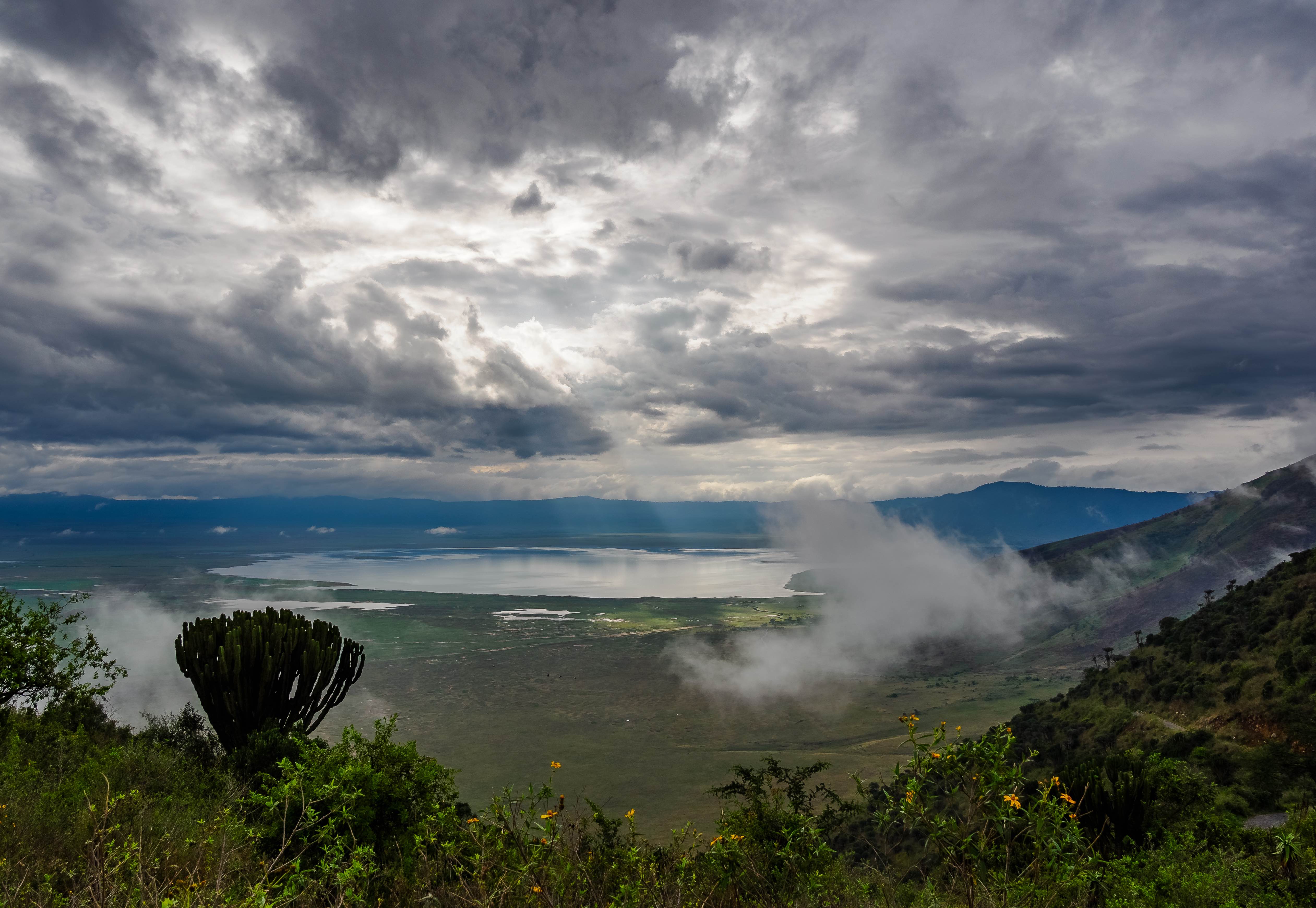
Nowhere else in Africa can you see this much wildlife from one viewpoint. Stand on the rim of Ngorongoro Crater at sunrise and you are looking down into a 260 square kilometre bowl holding an estimated 25,000 large animals, all year round, none of them migrating anywhere. Lions, elephants, hyenas, flamingos, and one of Tanzania's last strongholds of the critically endangered black rhino all live inside this single collapsed volcano.
This guide is based on Gotukio's experience booking safaris across northern Tanzania and covers everything you need to plan a Ngorongoro Crater safari in 2026: current fees, how the descent actually works, where to stay on the rim versus down in Karatu, how it fits with the Serengeti, and real itineraries you can book today. Plan for a minimum of one full morning inside the crater, with two nights in the area if you want to add a second activity like an Olduvai Gorge stop or a Maasai cultural visit without rushing.
Why Visit Ngorongoro Crater?
Ngorongoro is the only place in Tanzania's northern circuit where you're given a realistic shot at the Big Five in a single game drive. The crater floor is small enough, and the wildlife density high enough, that you don't need luck the way you sometimes do in the vast Serengeti plains. It's also one of the Seven Natural Wonders of Africa and a UNESCO World Heritage Site, both as a geological formation and for the Maasai pastoralist communities who still graze cattle on the crater rim and highlands.
The crater itself, the Ngorongoro Caldera, is the largest unbroken, unflooded volcanic caldera on Earth, formed when a volcano roughly the size of Kilimanjaro collapsed on itself around 2.5 million years ago. What's left is a natural enclosure 610 metres deep, with permanent water sources (Lake Magadi, the Ngoitokitok springs) that keep animals resident year round rather than migrating.
Pros:
Near-guaranteed Big Five sightings in a single half-day descent, including black rhino
Works as a standalone one or two-night stop, no need to commit a full week
Combines naturally with the Serengeti, Tarangire, and Lake Manyara on any northern circuit itinerary
Dramatic rim lodges with views most safari destinations can't match
Cons:
The crater floor gets genuinely congested during peak months, with dozens of vehicles converging on the same sightings
The $295 vehicle descent fee plus conservation fees make it one of the more expensive single-day activities in Tanzania
Rim lodges sit at altitude (around 2,200 to 2,400 metres) and get cold at night, which surprises people packing for "African heat"
No walking safaris or night drives are permitted on the crater floor, so the experience is strictly vehicle-based game drives
Ngorongoro Crater Fees and Permits in 2026
The Ngorongoro Conservation Area Authority (NCAA) charges a conservation area entry fee plus a separate crater descent fee if you actually want to drive down onto the floor. This trips people up constantly: you can pay to enter the conservation area (for example, driving through en route to the Serengeti) without ever paying the descent fee, and vice versa if you're already staying inside the NCA.
Fee Type | Adult (Non-East African) | Child 5-15 | Notes |
Conservation area entry (24 hrs) | Approx. $71 per person | Approx. $24 | East African citizens and residents pay significantly less; under-5s free |
Crater descent fee | $295 per vehicle | Included in vehicle fee | Charged once per vehicle, not per person; valid for one descent within 24 hours |
Camping fees (public sites) | $30-50 per person | Lower rate | Luxury tented camps can run $80-100+ per person |
Government VAT | 18% | 18% | Applied on top of all listed fees |
These figures are indicative for 2026 and subject to change without notice by the NCAA. Confirm current rates before booking, since Ngorongoro is one of the more frequently adjusted fee structures in Tanzania.
When adding Ngorongoro to your itinerary on Gotukio, all necessary fees will be added as part of transportation, activities, accommodation or park fees, so you won't be handling cash or card payments at the gate yourself. If you're comparing quotes from other operators, always ask whether the crater descent fee is included or billed separately, since a "cheap" quote that excludes it can add $295 per vehicle on the day.
Best Time to Visit Ngorongoro Crater
Because Ngorongoro's wildlife is resident rather than migratory, it's a genuine year-round destination, unlike the Serengeti where timing your visit around the migration matters enormously. That said, the crowd levels and weather still shift meaningfully by season.
Months | Rating | What to Expect |
January-February | Excellent | Warm, dry, good visibility, moderate crowds |
March-April | OK | Long rains begin, some access roads get muddy, noticeably fewer vehicles |
May | Poor | Peak of the long rains, several rim lodges close for annual maintenance |
June | Good | Rains clearing, landscape green and photogenic, crowds building |
July-September | Excellent | Peak dry season, best game viewing, but also the busiest crater floor of the year |
October | Good | Still dry, crowds thinning from the August-September peak |
November | OK | Short rains begin, occasional afternoon showers, fewer vehicles |
December | Excellent | Warm, mostly dry, popular with holiday travellers so book lodges early |
If avoiding the worst of the crowding matters more to you than perfect weather, June and October are the sweet spot. You get dry-season game viewing without the July to September vehicle density, when it's common to see 20 or more vehicles clustered around a single lion sighting.
Where to Stay: Ngorongoro Crater Accommodation
Your two real options are staying on the crater rim or staying down in Karatu, the small town about 15 to 20 kilometres from the entrance gate. Rim lodges put you first in line for the morning descent and deliver views nothing else in Tanzania matches, at a real price premium. Karatu lodges cost less, often have more space and better food, and only add about 45 minutes of driving time each way to reach the crater floor.
Here are properties you can book directly through Gotukio's trip builder, spanning both locations and budget tiers:
Lodge | Location | Category | Book |
Ngorongoro Serena Safari Lodge | Crater rim (Kimba) | Luxury | |
Ngorongoro Tortilis Camp | Crater rim area (Irmisigiyo) | Luxury tented camp | |
The Retreat Ngorongoro | Karatu | Luxury | |
Kitela Lodge | Karatu | Luxury | |
Ngorongoro Farm House | Karatu | Mid-range | |
Tloma Mountain Lodge | Karatu | Mid-range | |
Acacia Ngorongoro Camp | Crater rim area (Munge) | Luxury | |
Angata Ngorongoro Camp | Nyati | Tented camp |
Ngorongoro Serena Safari Lodge is the standout rim property if budget allows. It's built into the crater's jagged edge using local stone and vine, and every room has a private balcony looking straight down into the caldera. The Retreat and Kitela Lodge in Karatu are strong mid-to-upper options if you'd rather spend on the game drive experience than the room itself, and they typically run noticeably cheaper than an equivalent rim lodge. If you're travelling on a tighter budget, Ngorongoro Farm House and Tloma Mountain Lodge sit on working coffee farms outside Karatu and deliver comfortable, well-run stays at a fraction of rim prices.
Ready to start planning? On Gotukio you can build your custom Ngorongoro safari in minutes, real itineraries, transparent pricing, no waiting for quotes. Start building your Tanzania safari at gotukio.com.
How Many Days Do You Need at Ngorongoro Crater?
Minimum: one full day. A single sunrise-to-midday descent covers the crater floor thoroughly, since it's compact enough to see the major habitats (the Lerai forest, Lake Magadi, the Ngoitokitok springs) in one game drive.
Recommended: two nights. This lets you do the crater descent on your first full day and use the second morning for something you'd otherwise miss, like a stop at Olduvai Gorge (where some of the earliest hominid fossils were discovered) or a visit to a Maasai village on the rim. It is also a popular option to have a picnic lunch at the rim after the morning game drive and moving on to Ndutu or central Serengeti depending on the itinerary.
Skip it if: you have fewer than 5 total days in Tanzania and are prioritising the Serengeti migration. Ngorongoro is worth doing, but if time is genuinely tight, a Serengeti-only trip with more days on the plains will usually deliver a stronger overall safari than splitting a short trip between both.
Ngorongoro Crater vs the Serengeti: How They Fit Together
These aren't really competing destinations, they're complementary halves of the same northern circuit, but travellers often ask which to prioritise if they have to choose.
Ngorongoro Crater | Serengeti | |
Best for | Guaranteed Big Five in one day, black rhino | Space, migration, classic plains safari feel |
Wildlife pattern | Resident, year-round | Migratory, seasonal |
Typical stay length | 1-2 nights | 3-5 nights |
Crowding | High on the crater floor, especially July-Sept | Lower once you're away from the Mara River crossing points |
Vibe | Concentrated, dramatic, slightly theatrical | Vast, open, unpredictable |
Cost per day | Higher, due to descent fee | Comparable, driven more by lodge category |
If you can only pick one, the Serengeti gives you more days of genuinely varied safari and, depending on timing, the migration itself. Ngorongoro gives you near-certainty and unmatched scenery in a much shorter window. Most well-built Tanzania itineraries don't ask you to choose. They use Ngorongoro as a one or two-night anchor between Arusha and the Serengeti, since it sits directly on the route between the two.
Wildlife You'll See in Ngorongoro Crater
The crater's resident population includes an estimated 25,000 large mammals living within its walls year-round. You have a genuinely strong chance at all Big Five in one visit, including some of Tanzania's last black rhinos, a species that's become rare across much of East Africa. Large prides of lion patrol the crater floor and are used to vehicles, which makes for close, relaxed sightings. Spotted hyena density here is among the highest recorded anywhere in Africa, and you'll likely see them hunting or scavenging in daylight rather than only at dawn and dusk. Elephant bulls, mostly older males with impressively long tusks, frequent the Lerai forest on the crater floor. Flamingos gather in their thousands on the soda flats of Lake Magadi when water levels are right, and hippos pack into the Ngoitokitok springs area.
Getting to Ngorongoro Crater
Most travellers fly into Kilimanjaro International Airport (JRO), the main gateway for northern Tanzania safaris, then either drive or take a short charter flight to the Ngorongoro/Karatu area. The drive from Kilimanjaro Airport via Arusha to the crater rim takes roughly 4 to 5 hours on a mix of tarmac and unpaved roads. Many itineraries break this up with a stop at Tarangire or Lake Manyara National Park en route, turning transfer time into a game drive rather than dead travel time. If you're continuing on to the Serengeti afterward, the drive from Ngorongoro to the central Serengeti (Seronera) takes another 3 to 4 hours, or you can fly by light aircraft in around 30 to 45 minutes if you'd rather save the day.
Visa and Entry Requirements
Tanzania requires its own visa separate from the East Africa Tourist Visa, which does not include Tanzania. Most nationalities need the standard Tanzania tourist eVisa, costing around $50 and valid for up to 90 days, more than enough for any standard safari length. US citizens are the notable exception and must apply for the multiple-entry visa at $100 instead. Apply online in advance rather than relying on visa-on-arrival, since airport queues at Kilimanjaro International Airport can be long during peak season. You'll also need a passport valid for at least six months beyond your entry date with at least one blank page, and a yellow fever certificate if you're arriving from a country where yellow fever is present. If your trip extends to Zanzibar, note that mandatory Zanzibar Inbound Travel Insurance (currently $44) applies there but is not required for the Ngorongoro or Serengeti portions of a mainland-only itinerary.
What to Pack for the Crater
A warm layer for early mornings. The crater rim sits above 2,200 metres and mornings before descent can dip close to freezing, even though the crater floor itself warms up quickly once the sun is up.
Binoculars. Even in a wildlife-dense environment, black rhino and distant cats benefit hugely from a decent pair.
A dust-proof camera bag or cover. The crater floor roads throw up fine volcanic dust, especially in dry months.
Neutral-coloured clothing, not for camouflage since you stay in the vehicle, but bright colours and white both show dust and heat more.
A refillable water bottle. Most lodges provide filtered water, and single-use plastic is discouraged across the conservation area.
Motion sickness tablets if you're prone to it. The switchback descent road into the crater is steep and has tight turns.
How to Book Your Ngorongoro Crater Safari
You have three realistic routes to book a Ngorongoro safari: a local Tanzanian ground operator, an international travel agent, or a direct booking platform like Gotukio. Local operators know the crater intimately but usually require back-and-forth email quoting that can take days. International agents add a layer of convenience and often a markup, without necessarily knowing current crater conditions any better than a good local partner would.
Gotukio sits between those two options. You build your itinerary directly, choosing verified lodges on the rim or in Karatu, and see transparent per-person pricing including the conservation fees and descent costs before you book, with no waiting for a quote to come back. Because all the accommodation and logistics run through vetted local partners on the ground, you get local knowledge without losing the speed of booking online.
Sample Itineraries That Include Ngorongoro Crater
These are real, bookable itineraries currently available on Gotukio that include Ngorongoro Crater as a stop:
Tanzania Short Safari (3 nights, from $1,115 per person). A compact Ngorongoro and Serengeti combination, ideal if you have a long weekend or are adding a short safari onto a Zanzibar beach stay.
Tanzania Northern Circuit (6 nights, from $1,990 per person). Lake Manyara, Ngorongoro Crater, and the Serengeti in sequence, the classic northern circuit route and the most popular way to see all three in one trip.
Calving Season Safari (4 nights, from $1,049 per person). Tarangire, Ngorongoro Crater, and Lake Manyara, timed for the Serengeti's calving season on the southern plains near Ndutu, which sits close to the Ngorongoro Conservation Area boundary.
Bush to Beach Tanzania Classics (8 nights, from $2,679 per person). Ngorongoro Crater and the Serengeti followed by a Zanzibar beach extension, the most requested combination for travellers wanting safari and beach in one trip.
Cross-Border Migration (9 nights, from $3,300 per person). The Masai Mara, Serengeti, Ngorongoro Crater, and Lake Manyara across both Kenya and Tanzania, for travellers who want the full migration story from both sides of the border.
Cross-Border Safari (8 nights, from $2,530 per person). Amboseli, Lake Manyara, the Serengeti, and Ngorongoro Crater, combining Kenya's elephant country with Tanzania's northern circuit.
Ready to start planning? On Gotukio you can build your custom Tanzania safari in minutes, real itineraries, transparent pricing, no waiting for quotes. Start building your Ngorongoro safari at gotukio.com.
Insider Tips for Ngorongoro Crater
Descend early, not first. Everyone is told to be first through the gate at 6am, which just means you're first into the same traffic jam. A slightly later descent, around 7:30 to 8am, often means smoother sightings once the very first rush has spread out across the crater floor.
Book your descent day around the calendar, not just the season. Weekends and Tanzanian public holidays see a spike in domestic and regional visitors on top of the usual international crowd.
Stay in Karatu if photography matters more to you than the view from your room. You'll save meaningfully on accommodation and lose almost nothing in game drive quality, since everyone descends into the same crater regardless of where they slept.
Don't skip Olduvai Gorge if you have a second day. It's a short detour from the crater and adds genuine historical depth, this is where some of the most significant early hominid fossils in the world were found.
Pack for cold mornings even in "hot" months. The altitude catches out travellers who packed only for lowland Tanzania heat.
Confirm whether your quoted price includes the $295 vehicle descent fee. It's the single most common place operators shave a quote down to look cheaper, only for it to appear as an add-on later.
If overtourism concerns you, consider a Ngorongoro Highlands walking or cultural add-on rather than a second crater descent. It spreads your time and spending beyond the crater floor itself.
Frequently Asked Questions
Is the crater descent fee included in safari package prices?
It depends on the operator. On Gotukio, the $295 per-vehicle descent fee and conservation area entry fees are built into your quoted itinerary price, so there are no surprise charges at the gate. Always confirm this explicitly if you're comparing quotes elsewhere.
How crowded does Ngorongoro Crater actually get?
Genuinely crowded during July to September, when it's common to see 15 to 20 or more vehicles at a major sighting like a lion pride or the rhinos. Shoulder months like June and October offer noticeably better ratios of wildlife to vehicles.
Can I visit Ngorongoro Crater as a day trip from the Serengeti?
Yes, if you're staying near the Ndutu area or the southern Serengeti, but you'll spend a meaningful part of the day driving rather than viewing wildlife. Staying at least one night on the rim or in Karatu is the better option if the crater is a genuine priority rather than an add-on.
Do I need a 4x4 vehicle to enter the crater?
Yes. The NCAA requires safari vehicles meeting specific standards for the descent road, and self-drive rental cars generally aren't permitted onto the crater floor. This is one of the main reasons independent self-drive safaris in Tanzania still route through a licensed ground operator for the Ngorongoro portion.
Is Ngorongoro Crater safe to visit?
Yes. It's one of the most established and heavily regulated tourism sites in Tanzania, with a long safety track record. The main practical risks are altitude-related cold at the rim lodges and the steep descent road itself, which professional drivers navigate daily without incident.
What's the difference between the Ngorongoro Conservation Area and the crater itself?
The Ngorongoro Conservation Area (NCA) is a much larger protected area, roughly 8,300 square kilometres, that includes the crater along with highlands, forests, and Maasai grazing land. The crater is a single feature within it. You pay a conservation area entry fee simply to be inside the NCA, and a separate descent fee only if you drive down into the crater itself.
Can I combine Ngorongoro Crater with a Kenya safari?
Yes, this is a well-established route. Several Gotukio itineraries link the Masai Mara or Amboseli with the Serengeti and Ngorongoro Crater across the Kenya-Tanzania border, typically using a short flight between the two countries rather than a road crossing.
Is Ngorongoro Crater worth the cost?
For most travellers, yes. The near-certainty of Big Five sightings including black rhino, combined with the scenery, makes it one of the highest-value single days on a northern circuit itinerary, even accounting for the descent fee. It's less good value if your only goal is avoiding crowds, since the crater floor is genuinely busy in peak months regardless of price paid.
Planning a Tanzania safari? Build your trip at gotukio.com, browse verified itineraries, see transparent pricing, and book online in minutes.
Join the GoTukio Travel Club!
Receive exclusive inspiration and deals for your next trip.