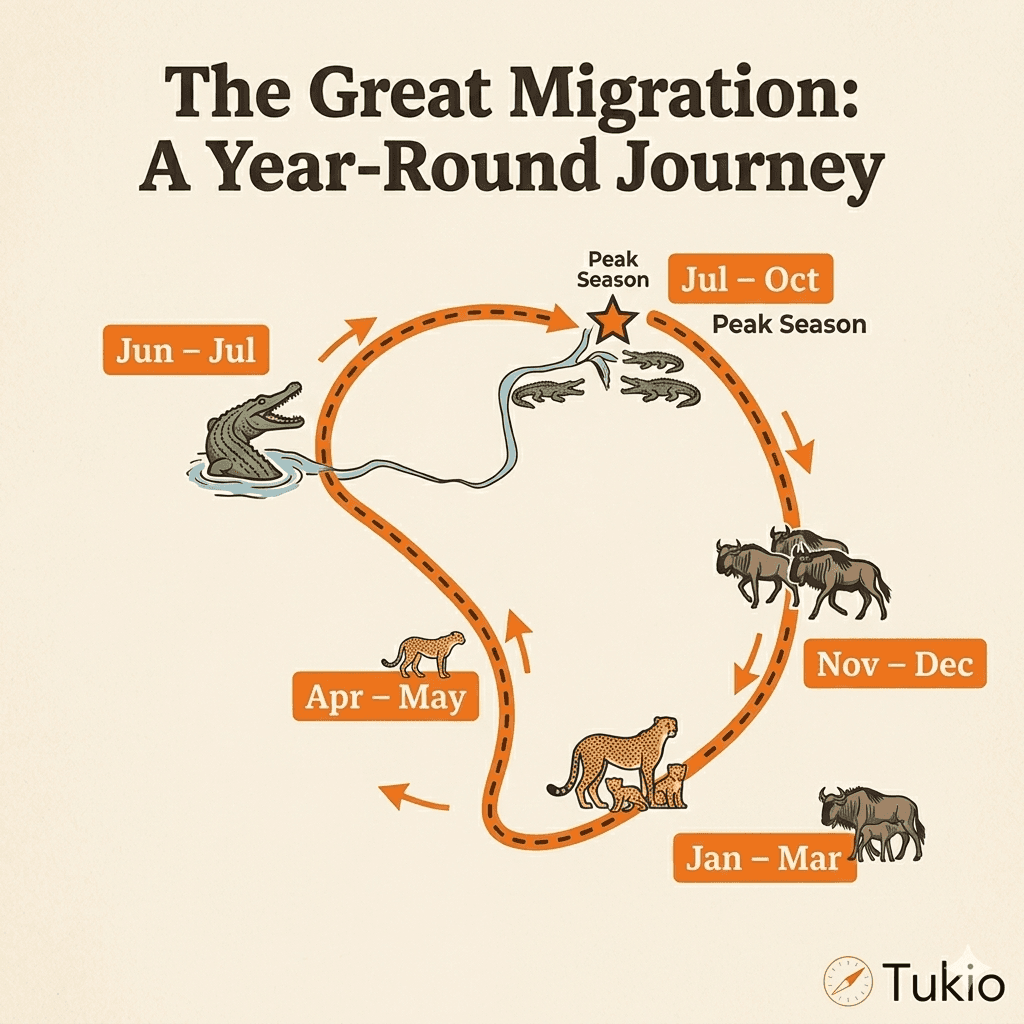
If there's one safari experience that genuinely lives up to the hype, it's the Great Migration. Over 1.5 million wildebeest, hundreds of thousands of zebras and gazelles, moving in a giant loop across the Serengeti and Masai Mara in an endless search for fresh grass.
There's one thing most people don't realise: the migration never stops. It's not just one event, it's a year-round circuit that spans two countries. Knowing where the herds are and when to show up is what turns a good safari into an absolutely unforgettable one.
Our guide breaks down the full circuit, month by month, so you can plan your trip like a pro.
Let's go.
What Is the Great Migration Circuit?
The Great Migration follows a roughly circular route of around 1,800 km across the Serengeti in Tanzania and the Masai Mara in Kenya. The herds move clockwise, always chasing the rains and the fresh grass that follows.
There's no finish line, it's a continuous loop, driven entirely by instinct and the smell of rain. The circuit passes through dramatically different landscapes throughout the year, which means each season offers something different and spectacular.
The key locations on the circuit:
🇹🇿 Southern Serengeti & Ndutu (Tanzania)
🇹🇿 Central Serengeti (Tanzania)
🇹🇿 Western Corridor & Grumeti (Tanzania)
🇹🇿 Northern Serengeti (Tanzania)
🇰🇪 Masai Mara (Kenya)
📅 The Migration Calendar: Where to Be & When
January – March | Calving Season in the Southern Serengeti
This is one of the most underrated times to witness the migration. The herds are spread across the short grass plains of Ndutu and the southern Serengeti, and around 500,000 calves are born in a matter of weeks.
It's a feast, for the wildlife and for you. Predators converge from all directions: lions, cheetahs, hyenas, and wild dogs are all out hunting the vulnerable newborns. The action is relentless.
Best park: Ndutu (Ngorongoro Conservation Area) & Southern Serengeti
Don't miss: Cheetah hunts on the open plains
April – May | The Long Rains & Northward Movement
The rains arrive and the plains turn an extraordinary green. The herds begin moving northward through the central Serengeti. This is low season, which means fewer tourists and significantly lower prices for lodges, often 30 to 40% cheaper.
The migration is more scattered during this period, making sightings less predictable. But if you love photography and dramatic landscapes without the crowds, this is your window.
Best park: Central Serengeti
Pro tip: Go for a mid-range lodge and save your budget for peak season
June – July | The Grumeti River Crossings (Western Corridor)
By June, the herds are funnelled into the Western Corridor, where they face the first major obstacle: the Grumeti River. Unlike the famous Mara River crossings, fewer people know about this one, making it a brilliant alternative.
Giant Nile crocodiles lurk in the murky water, where the wildebeest hesitate, surge, and eventually plunge. It's dramatic, chaotic, and absolutely wild.
Best park: Western Serengeti
Highlight: Grumeti River crossings
July – October | The Mara River Crossings (Peak Season)
This is the moment most people picture when they think of the Great Migration. The herds have pushed north through Tanzania and are now crossing into Kenya's Masai Mara via the iconic Mara River.
The crossings are dramatic beyond words. Thousands of wildebeest pace the bank, paralysed by fear, until finally the herd surges in. Crocodiles thrash in the water. The noise is deafening. Some make it across and some don't. It's nature at its most unfiltered.
Important: Crossings happen multiple times and at different points along the river. A good guide is everything here, they know where the herds have been building and can position you at the right spot.
Best park: Masai Mara (Kenya)
Peak months: August & September
Book early: This is the most in-demand safari period of the year
Pro tip: Choose a lodge that is closer to the river, this will allow you a shorter drive to get to the action, and more chances of being at the right place at the right time.
November – December | The Return South
As the short rains arrive in November, the herds begin the long journey back south into Tanzania. They move through the eastern Serengeti and push toward the Ndutu plains to calve again and so the cycle begins again.
This transitional period is again quieter, with good wildlife concentrations in the northern and eastern Serengeti. A great option if you want the Mara experience without the August crowds.
Best park: Northern & Eastern Serengeti
Frequently Asked Questions About the Great Migration
What is the Great Migration?
The Great Migration is the largest overland animal movement on Earth, involving over 1.5 million wildebeest, zebras, and gazelles that travel a year-round circular route between Tanzania's Serengeti and Kenya's Masai Mara in search of fresh grass and water.
When is the best time to see the Great Migration?
It depends what you want to see. For the famous Mara River crossings, July to October is peak season. For calving and predator action, January to March is spectacular. There's truly no bad time, just different highlights at different places.
Where exactly does the Great Migration happen?
The circuit covers the Serengeti National Park and Ngorongoro Conservation Area in Tanzania, and the Masai Mara National Reserve in Kenya. The most dramatic moments happen at the Grumeti River (June–July) and Mara River (July–October).
Can I see the Great Migration in both Kenya and Tanzania?
Absolutely, and combining both countries is one of the best ways to experience the full circuit. Many travellers split their trip between the Serengeti and the Masai Mara to follow the herds across the border.
How long should I spend to see the Great Migration?
A minimum of 4 to 6 days in the key parks gives you a strong chance of witnessing the migration. If you're combining Kenya and Tanzania, 10 to 14 days lets you do it properly. The more days, the more chances to witness one or more of the crossings.
Is the Great Migration guaranteed?
The migration itself is guaranteed, the herds are always moving. Witnessing specific events like river crossings aren't as they depend on the herds' timing and mood. That's part of what makes it so thrilling.
Planning the Circuit: Kenya, Tanzania, or Both?
Tanzania Only 🇹🇿
Tanzania gives you access to the Serengeti's vast landscapes year-round. You can follow the migration from calving season in the south all the way to the river crossings in the north. The Serengeti is massive and you'll need to position yourself in the right part of the park for each season. Check the lodge’s location when you book to make sure you are in the right place.
Best for: Those who want a classic, deep Serengeti experience
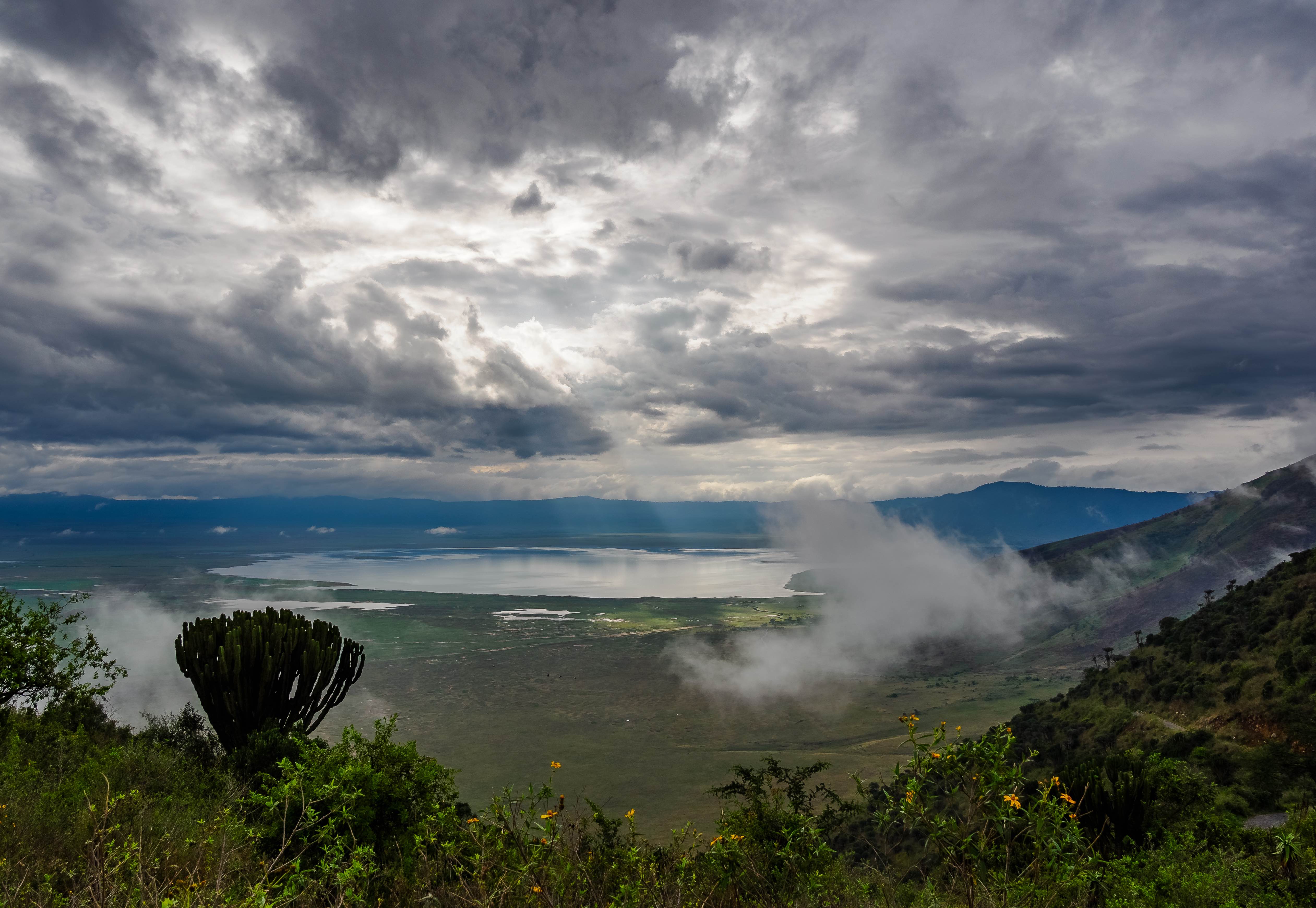
Combine with: Ngorongoro Crater for one of Africa's most iconic single-day safaris
Kenya Only 🇰🇪
The Masai Mara is smaller and more concentrated than the Serengeti, which can mean more intense wildlife sightings in a compact area. It's also more accessible as Nairobi is a major hub with great flight connections.
Best for: First-time safari travellers or those with less time
Best season: July to October for chances to see river crossings
The Full Circuit (Kenya + Tanzania)
This is the ultimate experience. Start in Tanzania's southern Serengeti in calving season, travel the circuit north through the Grumeti, cross into Kenya for the Mara crossings, then head back south. You're essentially following the herds. For a shorter version, opt for a cross-border safari toward the end of June.
Best for: Serious safari enthusiasts or bucket-list trips
Trip length: 12 to 16 days recommended
What Does It Cost?
Here's a rough guide per person per day, including accommodation and game drives at peak season. Pricing varies highly depending on lodge location as well as the number of travelers sharing a vehicle:
Category | Tanzania (Serengeti) | Kenya (Masai Mara) |
🏕️ Budget | $250–$550 | $250–$500 |
🛏️ Mid-range | $500–$950 | $450–$800 |
🦒 Luxury | $800–$2,000+ | $750–$1,800+ |
Additional costs to factor in:
Park fees: $85/day (Tanzania), $200/day (Masai Mara)
Internal flights: $400-$800 per leg (highly recommended to save time)
Tips: $15–$20/day for guides, $10/day for lodge staff
Visas: Kenya e-Visa (~$30), Tanzania e-Visa (~$50)
Gotukio tip: Booking during shoulder season (June or November) can save you 30–40% while still offering excellent game viewing. Check the lodge selection on your itinerary for location and best prices based on the migration moment.
What to Pack for a Great Migration Safari
Keep it lightweight and neutral-toned. Bush planes have strict luggage limits (typically 15 kg soft bag only) so pack smart - most lodges offer complementary laundry.
Clothing: Khaki, beige, and olive tones. Layers are key as early morning game drives can be surprisingly cold even near the equator. Long sleeves help against the sun and mosquitoes. Also keep in mind that it gets very dusty when choosing your outfits.
Gear: Binoculars are essential (10x42 is the sweet spot), a good camera with a zoom lens and a portable charger.
Health: Malaria prophylaxis is strongly recommended for both countries. Yellow fever certificate may be required depending on your travel history. Bring insect repellent with DEET. Drink bottled or filtered water only.
Documents: Passport valid for 6+ months, visas, travel insurance (make sure it covers medical evacuation).
Avoid: Bright colours, camouflage (can be illegal in some countries), and heavy suitcases. Also drones are prohibited in national parks, so if you wish to use one you will need to apply for a special permit.
A Note on Responsible Tourism
The Serengeti-Mara ecosystem is one of the last great wilderness areas on Earth. How you travel here matters.
Choose lodges and operators that support local communities and conservation, they don’t have to be luxurious, even small locally run lodges give back to their community
Respect wildlife: Stay in the vehicle during game drives and never encourage animals to approach
Support Maasai-owned businesses and cultural experiences (ask your guide for recommendations)
Avoid single-use plastics: Many camps are plastic-free and we encourage you to be too.
The communities and ecosystems that make this circuit possible depend on tourism being done well.
Planning your Great Migration safari? At Gotukio.com, you can build your full Kenya–Tanzania itinerary online in minutes. Choosing your lodges, transport, and activities with full price transparency. No waiting for quotes. No hidden fees. Just your safari, made easy.
Join the GoTukio Travel Club!
Receive exclusive inspiration and deals for your next trip.