Three of Nairobi's most-visited attractions sit within about 15 minutes of each other on the edge of the city: the AFEW Giraffe Centre, Giraffe Manor next door, and the David Sheldrick Wildlife Trust's elephant orphanage. Between them, they're responsible for some of the most widely shared wildlife photos online, a giraffe leaning through a breakfast-room window, a baby elephant wrapped in a blanket mid-feed, and most travelers recognize the images long before they know the names behind them.
This guide covers what each organization actually does, the conservation work behind the photos, and how to fold them into a Kenya itinerary, including The Safari Collection's Kenya portfolio, which you can book directly through Gotukio.
Why These Three Places Are So Instagram-Famous
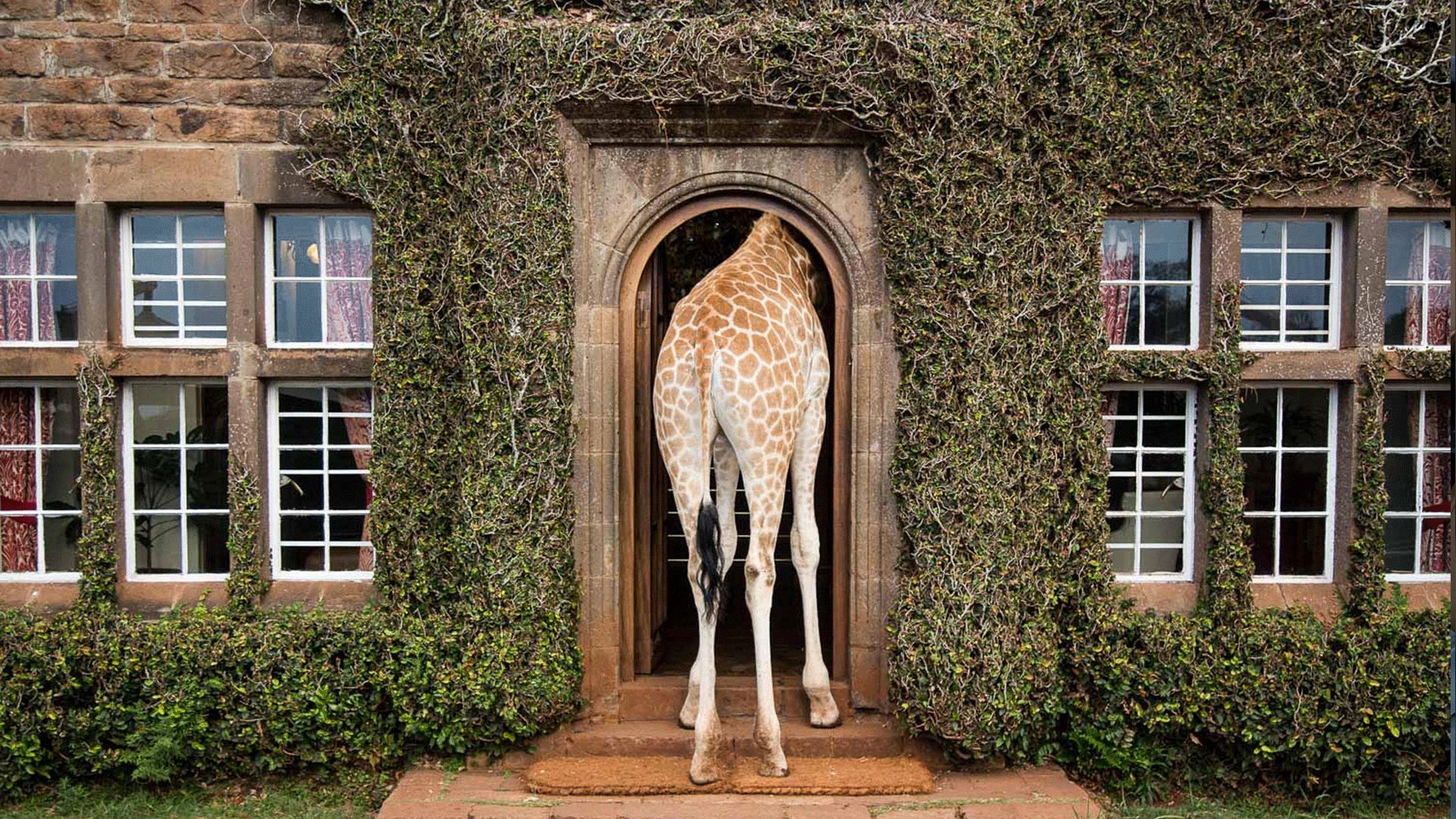
Giraffe Manor has been described as one of the most Instagrammed properties in the world, and it earned that reputation honestly: nowhere else can you eat breakfast while an endangered giraffe tries to steal toast off your plate through the dining room window. The Sheldrick Wildlife Trust's daily elephant feeding draws a similar reaction for a similar reason. It's a genuinely rare, close-range encounter with an animal most people will only ever see from a vehicle at a distance, delivered in a moment that photographs beautifully without any effort.
It’s worth naming directly, since it's exactly why these three places work as well as they do for both conservation funding and content: the photo is real, the closeness is real, and neither is staged. This is different from a captive wildlife "experience" built purely for tourist photos, since the giraffes at Giraffe Manor and the Giraffe Centre come and go freely, and the elephants at Sheldrick are orphans being rehabilitated for eventual release, not animals kept for handling. The selfie appeal isn't a marketing gimmick layered on top of the conservation work, but rather a byproduct of what genuine, close-proximity conservation work with these particular species happens to look like.
The AFEW Giraffe Centre: Where the Conservation Story Started
The Giraffe Centre is the origin point for everything else on this list. It was founded in 1979 by Betty and Jock Leslie-Melville under the African Fund for Endangered Wildlife (AFEW), after they learned that the Rothschild's giraffe (now classified as a subspecies of the Nubian giraffe) was down to a handful of individuals in the wild, displaced by land subdivision near Eldoret in western Kenya. Several giraffes were relocated to the Leslie-Melvilles' Nairobi property to establish a breeding population, and that population is the ancestor of every giraffe you'll see at both the Centre and next door at Giraffe Manor today.
The Centre operates a raised wooden viewing platform where visitors hand-feed pellets to the resident giraffes at eye level, which is the source of most of the Centre's own famous photos, including the well-known "giraffe kiss" where a giraffe takes a pellet directly from a visitor's mouth. Beyond the visitor experience, the Centre runs a free environmental education program for Kenyan schoolchildren, bringing thousands of students through each year at no cost, specifically to build long-term conservation awareness in the generation that will inherit these landscapes.
Giraffe Manor: Luxury Hotel and Conservation Partner
Giraffe Manor sits directly next door to the Giraffe Centre and shares the same herd of giraffes, which move freely between the two properties across shared, unfenced land. The manor itself dates to 1932, and today operates as a 12-room boutique hotel under The Safari Collection, one of Kenya's leading safari operator groups and a featured partner on Gotukio.
What makes Giraffe Manor different from simply staying near the Giraffe Centre is proximity without a barrier. Giraffes wander the 12-acre grounds and regularly put their heads through open windows during breakfast and evening cocktail hour, an experience that's become the property's signature and the reason it's been named among the world's most photographed hotels. The manor supports the same Rothschild's giraffe breeding and reintroduction program as the Centre next door, and a stay here functions as a direct, ongoing contribution to that work rather than a one-off day visit.
David Sheldrick Wildlife Trust: Inside Nairobi's Elephant Orphanage
The David Sheldrick Wildlife Trust, founded by conservationist Daphne Sheldrick in memory of her husband David, is the organization behind the baby elephant photos you've almost certainly seen shared across social media. Based on the edge of Nairobi National Park, the Trust rescues elephant and rhino calves orphaned by poaching, drought, human-wildlife conflict, or natural causes, hand-raises them, and works toward eventual release back into the wild, primarily at Tsavo.
The public visiting window is a one-hour daily feeding session, typically 11:00 AM to 12:00 PM, when keepers bottle-feed the youngest orphans in an open, roped-off area in front of visitors. This isn't a staged photo opportunity: it's the calves' actual feeding schedule, opened to the public specifically to fund the extremely expensive, round-the-clock hand-rearing process each orphan requires (elephant calves need milk feeds every three hours, day and night, for years). The Trust also runs a well-known foster program, where individuals can symbolically adopt a specific orphan for an annual donation, which has become one of the most effective small-donor conservation funding models in East Africa.
2026 update: Entrance fees, the foster donation amount, and visiting slot availability are subject to change and should be confirmed directly on the Trust's official site before you travel, since third-party tour operators frequently mark these up significantly.
The Safari Collection's Kenya Portfolio
Giraffe Manor is the best-known property in The Safari Collection, a Kenyan-owned group of safari lodges built around the same conservation-and-community model. Beyond the manor, the portfolio includes:
Sasaab, a tented lodge in Samburu overlooking the Ewaso Nyiro River, where Samburu community members make up the large majority of staff and lodge revenue funds local dental and eye clinics alongside conservation initiatives like the Grevy's Zebra Trust
Solio Lodge, the only lodge inside the privately owned Solio Game Reserve near Mount Kenya, home to one of Africa's largest concentrations of black and white rhino, with lodge revenue funding local schools and medical clinics
Sala's Camp, a seven-tent camp in the southern Masai Mara near the Sand River, right on the migration corridor toward the Serengeti border, making it one of the earliest camps to pick up the wildebeest herds each year
Booking any of these through Gotukio means the same transparent pricing and direct booking model you'd expect for any Kenya itinerary, rather than routing through a third-party agent for a quote. You can also do a trip across all Safari Collection properties through our pre-set guided trip.
How to Combine These With Your Kenya Safari
Most travelers slot Giraffe Manor, the Giraffe Centre, and Sheldrick into a Nairobi stopover, either at the start of a Kenya safari itinerary before flying out to the Masai Mara or another park, or at the end, on the way back to the airport. A single overnight at Giraffe Manor plus a morning visit to Sheldrick before your onward flight is the most common and efficient combination, since all three sites sit close enough together to avoid burning a full day on transit.
If Giraffe Manor is fully booked (it frequently sells out six months or more in advance), staying anywhere in Karen or Langata and visiting the Giraffe Centre and Sheldrick as day trips covers the same experience at a fraction of the cost.
How to Book Your Nairobi Add-On
Ready to add this to your itinerary? On Gotukio you can build your custom Kenya safari in minutes, including a Nairobi stopover at Giraffe Manor or another Safari Collection property, with transparent pricing and no waiting for quotes. Start building your safari →
Insider Tips
Book Giraffe Manor as far in advance as possible. Rooms routinely sell out six to twelve months ahead, especially for weekend stays
If you can't get a room, ask about a day-visit slot, since the manor occasionally opens limited day access outside overnight bookings
Arrive at Sheldrick a few minutes before the 11:00 AM opening. The viewing area fills up quickly and front rows see the calves far better
Combine your Sheldrick visit with a same-morning stop at the Giraffe Centre, since both sit on the same side of the city and pair naturally into one loop
If you're short on time, a Nairobi stopover at the start of your trip is a good way to adjust to the time zone before flying onward to a park
Frequently Asked Questions
Is Giraffe Manor worth the cost?
For most travelers, yes, specifically because the experience (giraffes at breakfast, in a boutique 12-room hotel) is genuinely unique and not replicable elsewhere. If cost is a concern, the neighboring Giraffe Centre offers a similar animal encounter for a small fraction of the price without an overnight stay.
Can you visit the Giraffe Centre without staying at Giraffe Manor?
Yes. The Giraffe Centre is a separate, independently bookable attraction open to day visitors, and doesn't require a Giraffe Manor reservation.
How long is the Sheldrick elephant orphanage visit?
The public viewing window is about one hour, typically 11:00 AM to 12:00 PM daily, timed to the calves' actual feeding schedule.
Do the Sheldrick elephants get released back into the wild?
Yes. Orphaned elephants are hand-raised at the Nairobi facility, then gradually reintegrated at a rehabilitation site in Tsavo before eventual release into wild herds, a process that can take up to a decade for elephants orphaned very young.
Is the Giraffe Centre or Sheldrick better for kids?
Both work well for children. The Giraffe Centre's hand-feeding platform is more interactive and hands-on, while Sheldrick's feeding session is viewed from a slight distance but tends to captivate kids with the baby elephants' behavior.
How far in advance should I book Giraffe Manor?
As early as possible; six months ahead is a reasonable minimum for weekend availability, and popular dates can sell out even further in advance.
Are these attractions ethical, given how photogenic they are?
Yes, based on how they're structured. Neither the Giraffe Centre, Giraffe Manor, nor Sheldrick involves handling, riding, or forced proximity. Giraffes at both giraffe sites move freely and choose to approach visitors, and Sheldrick's elephants are orphans in active rehabilitation, not animals kept for public interaction.
Can I combine a Nairobi stopover with a Masai Mara or other Kenya safari?
Yes, this is the most common way travelers use these three sites, typically as a one- or two-night stopover at the start or end of a longer Kenya safari itinerary.
Planning a Kenya safari? Build your trip at gotukio.com, browse verified itineraries including The Safari Collection's properties, and book online in minutes.
Join the GoTukio Travel Club!
Receive exclusive inspiration and deals for your next trip.