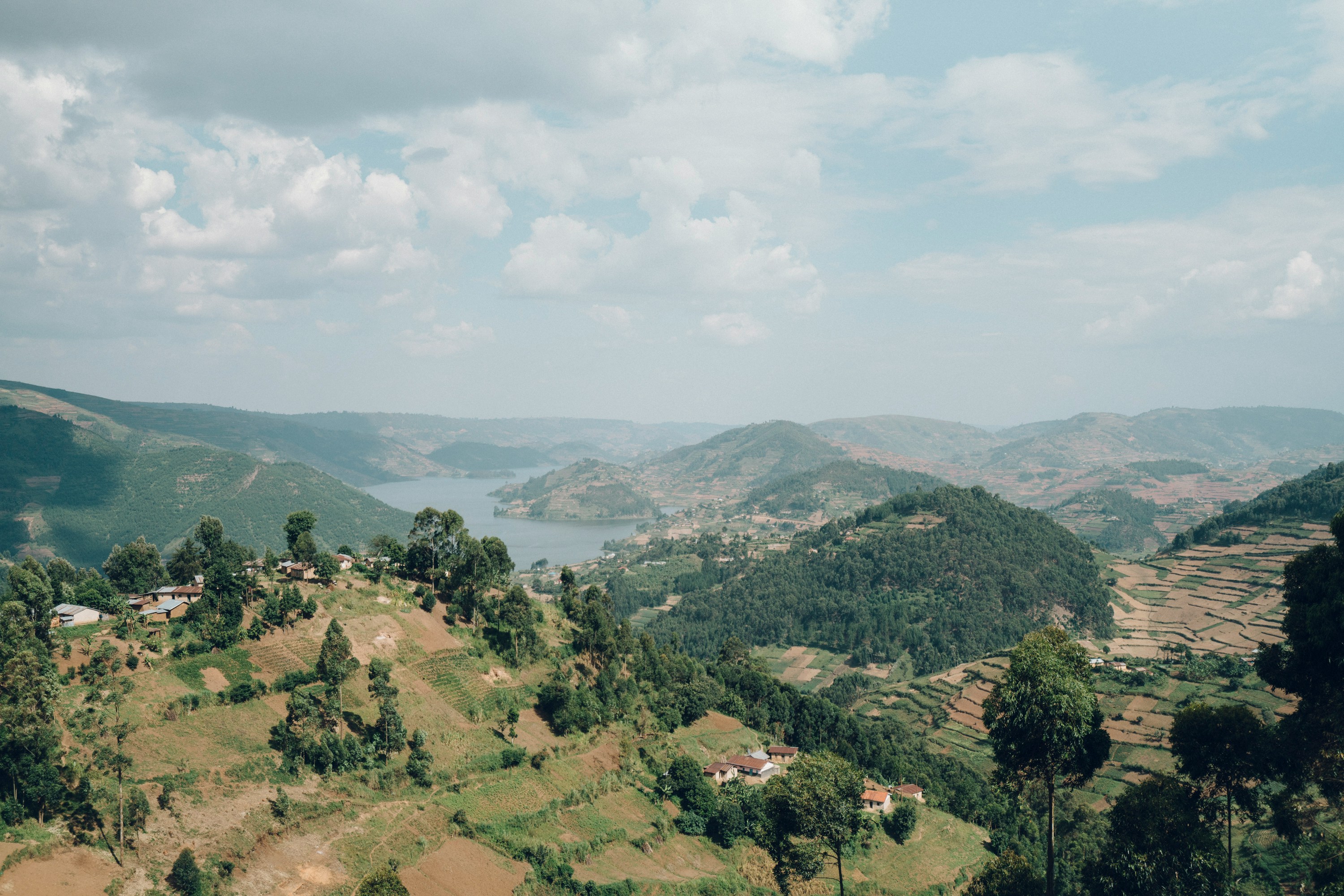
What Uganda does have is half the world's remaining mountain gorillas, tree-climbing lions, thundering waterfalls on the Nile, and a primate diversity that makes it genuinely unlike anywhere else on the continent. Add in the fact that it's more affordable than most East African destinations, and you start to wonder why it's not on more people's radar.
If you're planning a Uganda safari in 2026, whether you're after gorillas, chimps, or classic game drives, this guide covers everything you need to know. We'll get into the best parks, how much things actually cost, the best time to go, and how to build the perfect itinerary.
Why Visit Uganda?
Uganda sits right in the heart of East Africa, straddling the equator and bordered by Kenya, Tanzania, Rwanda, the DRC, and South Sudan. It's often called the Pearl of Africa, a name that was coined by Winston Churchill, and once you've been, you'll understand why.
Here's what makes Uganda special:
Mountain gorillas: Uganda is home to roughly 459 mountain gorillas in Bwindi Impenetrable National Park alone, close to half of all the mountain gorillas left on the planet. The opportunity to spend an hour just a few metres from a wild gorilla family is, for most people who do it, the single most powerful wildlife experience of their lives.
Primates everywhere: Uganda has 20 primate species, including chimpanzees, red colobus monkeys, L'Hoest's monkeys, and black-and-white colobus. Kibale Forest is considered the primate capital of the world.
The Nile: Murchison Falls National Park is where the entire flow of the Nile is forced through a 7-metre gorge before plunging 43 metres. It's one of the most dramatic waterfalls in Africa, and you can take a boat right up to the bottom of it.
Tree-climbing lions: In Queen Elizabeth National Park's Ishasha sector, lions climb fig trees, something you'll barely see anywhere else in Africa. Nobody fully knows why they do it; current thinking points to a combination of avoiding insects and getting a better view of the plains.
Over 1,080 bird species: Uganda holds more than half of Africa's total bird species, including the extraordinary shoebill stork, one of the most prehistoric-looking birds alive, and a genuine bucket-list tick for birders.
Value for money: Compared to Rwanda (where gorilla permits run $1,500 per person), Uganda's $800 permit and generally lower accommodation costs make it significantly more accessible. A well-rounded 10-day Uganda safari with gorilla trekking, chimpanzee tracking, and game drives is achievable for far less than an equivalent trip to some of Africa's more famous destinations.
Top National Parks in Uganda
Uganda has 10 national parks, each protecting a different ecosystem. You don’t have to visit all of them but here are the ones worth knowing about.
Bwindi Impenetrable National Park
Bwindi is the one most people come to Uganda for. A UNESCO World Heritage Site in the country's southwest, it covers 331 km² of dense ancient rainforest and is home to almost half the world's mountain gorillas. The forest itself is extraordinary, extraordinarily biodiverse, extraordinarily beautiful, and extraordinarily steep in places.
Bwindi is divided into four trekking sectors: Buhoma (the original and most established), Ruhija (higher altitude, harder terrain), Rushaga (the largest sector, with the most gorilla families), and Nkuringo (remote, dramatic views). Your permit is tied to a specific sector and family, so think carefully about which sector you book as this affects both the difficulty of your trek and which lodge makes sense to stay in.
Murchison Falls National Park
Uganda's largest national park, Murchison is where the country's classic savannah safari experience lives. The park straddles the Victoria Nile in Uganda's northwest and is home to elephants, lions, buffaloes, Rothschild's giraffes (one of the world's most endangered giraffe subspecies), hippos, Nile crocodiles, and leopards.
The two experiences you don’t want to miss here are the game drives on the northern bank (where most of the big game concentrates) and the Nile boat cruise up to the base of Murchison Falls. The boat cruise is spectacular as you'll drift past hundreds of hippos and crocodiles with elephants drinking on the bank, and then the falls appear ahead of you, roaring through that narrow gorge.
A bonus worth adding: Ziwa Rhino Sanctuary, about 2 hours south of the park on the main Kampala road. This is the only place in Uganda to see wild white rhinos, and a short guided bush walk to find them completes Uganda's Big Five story.
Queen Elizabeth National Park
Uganda's most biodiverse park sits in the country's west, straddling the equator. It covers savannahs, forests, wetlands, and the Kazinga Channel which is a natural waterway connecting Lakes Edward and George, giving you an unusually wide range of wildlife in one place.
The Kazinga Channel boat cruise is one of the best in Africa: enormous concentrations of hippos and buffalo, elephants at the water's edge, and over 600 bird species. Game drives in the Kasenyi Plains are excellent for lions and elephants. And the Ishasha sector in the south is where you head for those tree-climbing lions. Plan to spend a few hours here.
Kibale Forest National Park
Kibale is the place to track chimpanzees. The forest harbours around 1,500 chimpanzees, giving it the highest density of primates in Africa. A half-day chimpanzee trekking experience here is intense, loud, and utterly memorable. You'll hear the chimp community before you see them, and when you do find them, they barely pause to acknowledge your existence.
Beyond chimps, Kibale is also a great complement to Bwindi if you're building a longer Uganda itinerary. It's a few hours' drive north, making a logical circuit.
Lake Mburo National Park
Lake Mburo is Uganda's smallest savannah national park and, conveniently, the closest major park to Kampala (about 4 hours). It doesn't have elephants or lions, but it does have zebras, impalas, elands, buffaloes, topis, and hippos, and it's one of the only places in East Africa where you can do walking and cycling safaris through open bush without a vehicle.
It makes a great first or last night on a Uganda safari circuit, especially if you're landing at Entebbe and heading southwest.
Kidepo Valley National Park
Kidepo is Uganda's wildest and most remote park, sitting in the far northeast near the South Sudan border. Very few tourists make it here, which is partly what makes it special. The landscape is dramatic and semi-arid, the game is excellent (lions, elephants, buffaloes, cheetahs, ostriches, Burchell's zebras), and you'll often have it almost entirely to yourself. Factor in a domestic flight if you're going as the road journey from Kampala is long.
Gorilla Trekking: Everything You Need to Know
Gorilla trekking is the main reason most people come to Uganda, and rightly so. If you've never done it before, here's how it works and what to expect.
How Does It Work?
You start with a briefing at the park gate, usually around 8am, where a ranger explains the rules: stay 7 metres from the gorillas at all times, no flash photography, keep your voice low, don't eat or drink in front of them. Then your group, which is a maximum of 8 people per gorilla family, heads into the forest with an armed guide.
The trek itself can last anywhere from 30 minutes to 8 hours, depending entirely on where the gorilla family decided to bed down the night before. Trackers head out before dawn to locate them, and your guide gets updates on the radio. Once you find the family, you get one hour with them. That hour goes incredibly fast.
The gorillas are habituated which means that they are used to human presence, so means they will carry on feeding, playing, and going about their day with you standing a few metres away. Silverbacks can weigh over 200kg and will sometimes walk straight past you. It's difficult to prepare for quite how overwhelming it is.
Gorilla Trekking Permits in 2026
Permits in Uganda are issued by the Uganda Wildlife Authority and cost:
Foreign non-residents: $800 per person
Foreign residents of East Africa: $700 per person
East African citizens: around $50 (in local currency)
The Gorilla Habituation Experience (GHEX) which allows you to spend 4 hours with a semi-wild gorilla family as researchers work to habituate them to human visitors, costs $1,500 per person and is available only in Bwindi's Rushaga sector. It's a far more raw, intimate experience than the standard trek and genuinely worth considering if budget allows.
Permits sell out months in advance for peak season. Book at least 6 months ahead if you're travelling June to September or December to January. Outside those windows you'll generally find more availability, but it's always worth confirming early.
Bwindi Trekking Sectors Compared
Sector | Difficulty | Best For |
Buhoma | Moderate | First-timers, good lodge options |
Ruhija | Hard | Birding, serious trekkers |
Rushaga | Moderate–Hard | Most gorilla families, GHEX available |
Nkuringo | Hard | Remote feel, stunning scenery |
A critical point: your lodge must be in the same sector as your permit. The sectors are separated by hours of driving through mountain roads. Don't book accommodation in Buhoma and then receive a Rushaga permit. Confirm both together, ideally through the same operator. When you book your trek on Gotukio.com, we will make sure that this is in place so you won’t have to worry about it.
What to Expect Physically
Gorilla trekking is a genuine hike through dense, steep, equatorial rainforest. Elevation in Bwindi sits between 1,160 and 2,607 metres, and the terrain can involve slippery slopes, tangled roots, and thick undergrowth. Most healthy adults manage it fine, but you should be prepared for a physically demanding day. Porters are available at the trailhead for around $15-20 and are well worth hiring as they'll carry your bag, steady you on steep sections, and enhance the experience.
The minimum age for gorilla trekking is 15 years old.
Chimpanzee Trekking in Uganda
Uganda has more than 5,000 chimpanzees, our closest relatives, sharing about 98.7% of our DNA. Watching them in the wild is a completely different experience to gorillas: chimps are loud, fast, unpredictable, and endlessly fascinating.
Where to Track Chimpanzees
Kibale Forest National Park is the gold standard. With around 1,500 chimps and a 95% sighting success rate, it's the most reliable place in Africa to track them. The chimp trekking permit costs $200 per person for foreign non-residents.
Kyambura Gorge (Queen Elizabeth NP) is a dramatic forest canyon that harbours a single isolated chimpanzee community. The experience here is more intimate and intense as there are fewer tourists, a smaller group, and a population of chimps that have been cut off from the wider forest, making them uniquely expressive around humans. Permits are $100 per person.
Budongo Forest (near Murchison Falls) is a less-visited option that works well if you're already doing the Murchison circuit, giving you a primate experience without doubling back south.
The best time for chimp trekking aligns with the dry seasons (June to September and December to February), when trails are clearer and chimps are easier to track.
Best Time to Visit Uganda
Uganda can be visited year-round, but the dry seasons offer the best overall experience.
June to September (Long Dry Season)
This is peak season and the most popular time to visit. Trails are drier, roads are more passable, and wildlife is easier to spot across the savannah parks. Gorilla trekking and chimpanzee tracking are most comfortable. Book permits and accommodation well in advance as this window fills up fastest.
December to February (Short Dry Season)
A strong alternative to the main dry season. Slightly fewer tourists than the June to September period. Conditions are excellent across all parks, and gorilla permits are more available. A great time for combining Uganda with a beach extension to Zanzibar or a Kenya/Tanzania safari.
March to May (Long Rains)
This is Uganda's wettest period. Forest trails in Bwindi and Kibale become genuinely muddy and slippery, making gorilla and chimp trekking more challenging. That said, the landscape is extraordinarily lush, you'll encounter far fewer tourists, and the gorillas need to be seen regardless of the weather. Some travellers specifically prefer the wet season for the atmosphere and lower lodge prices.
October to November (Short Rains)
Similar to the long rains in terms of conditions, it’s a shoulder season that offers a middle ground between price, crowds, and accessibility. Perfectly viable for the well-prepared traveller.
Bottom line: If you have flexibility, go June to September or December to February. If you want lower prices and don't mind some mud, March to May can be surprisingly rewarding.
How Much Does a Uganda Safari Cost?
Uganda is one of the more affordable primate destinations in Africa, but costs can still add up quickly depending on how you travel. Here's a realistic breakdown for 2026.
The Gorilla Permit: Your Non-Negotiable Cost
At $800 per person, the gorilla permit is the single biggest fixed cost on any Uganda safari. It cannot be negotiated, discounted, or avoided, and it's the same price whether you book through a tour operator or directly with the Uganda Wildlife Authority.
Accommodation
Uganda's lodge market has expanded significantly in recent years, with options at every level:
Budget lodges / community camps: $50-$120 per person per night
Mid-range lodges: $150-$350 per person per night (full board)
Luxury tented camps / lodges: $400-$900+ per person per night
Lodges near Bwindi (especially in Rushaga and Nkuringo) tend to be pricier given the remoteness, so factor this in when planning sector choices.
Complete Safari Package Costs (2026)
These figures are per person, based on international non-residents, and typically include accommodation (full board), ground transport in a 4×4, a guide, and park permits. International flights are excluded.
Trip Type | Duration | Estimated Cost |
Gorilla-only safari | 3 to 4 days | $1,500-$2,500 |
Gorilla + chimp trekking | 5 to 7 days | $2,500-$4,500 |
Gorilla + chimps + wildlife (mid-range) | 8 to 10 days | $4,000-$6,500 |
Full Uganda circuit (luxury) | 10 to 14 days | $8,000-$15,000+ |
Group size makes a significant difference to per-person costs, since vehicle and guide fees are fixed. Travelling as a couple already saves substantially over a solo trip; a group of four or more reduces costs further.
Additional Costs to Budget For
Chimp permit (Kibale): $200 per person
GHEX gorilla habituation experience: $1,500 per person
Rhino tracking at Ziwa: ~$45 per person
Domestic flights (Entebbe to park airstrips): $300-$450 per person one way
Porter fees (gorilla trekking): $15-$20 per trek
Uganda e-Visa: $50
Yellow fever vaccination (required): varies by country
You can create your own Uganda itinerary on the Gotukio.com platform to see the exact costs.
How Many Days Do You Need in Uganda?
This depends on what you want to do. Here's a quick guide:
3 days: Gorilla trekking only. This is the minimum to make the trip viable. Fly into Entebbe, drive or fly to Bwindi, do your trek, return. It's tight but doable.
5 to 7 days: Gorilla trekking + chimpanzee tracking in Kibale. Adds a primate-focused second experience and feels much more like a proper trip.
8 to 10 days: Gorilla trekking + chimps + wildlife safari in Queen Elizabeth or Murchison Falls. This is the sweet spot for most travellers as you get primates, classic game drives, and a boat safari. Most of Uganda's best in one trip.
12 to 14 days: The full Uganda circuit. Adds Kidepo, Lake Mburo, Ziwa Rhino Sanctuary, or a Rwanda gorilla extension. Ideal for serious wildlife enthusiasts or those combining Uganda with Kenya or Tanzania.
The honest recommendation: If you're travelling all the way to Uganda, do at least 8 days. A 3-day gorilla-only trip works if you're adding it to a broader East Africa itinerary, but Uganda deserves more than a quick in-and-out.
Uganda vs Rwanda: Which Should You Choose?
This is one of the most common questions for people planning a gorilla safari and it's a good one.
Uganda wins on:
Price: permits are $800 vs Rwanda's $1,500
Variety: you can combine gorillas with chimps, game drives, waterfalls, and the Nile all in one trip
Gorilla numbers: Uganda has more habituated gorilla families across more sectors
Landscape: Bwindi is wilder and more dramatic than Rwanda's Volcanoes National Park
Overall value: mid-range lodges are more affordable and generally excellent
Rwanda wins on:
Accessibility: Kigali is a more straightforward hub with better international connections, and the drive to Volcanoes NP is only 2 to 3 hours
Luxury: Rwanda's high-end lodge options are exceptional
Ease: the whole experience is more polished and logistically seamless
Combining with other destinations: Rwanda pairs naturally with Kenya and Tanzania for a multi-country itinerary
Our take: If budget is a factor, Uganda is the clear winner. If you want a short, ultra-luxury gorilla experience and don't mind the premium, Rwanda delivers it beautifully. Many travellers do both, entering via Rwanda and exiting via Uganda, or vice versa, with gorillas on both sides of the border.
How to Get to Uganda
By air: Entebbe International Airport (EBB) is Uganda's main gateway, located 37km south of Kampala on the shores of Lake Victoria. It's well connected to African hubs including Nairobi (Kenya Airways, Ethiopian), Kigali (RwandAir), Addis Ababa (Ethiopian), and Dubai and Amsterdam for intercontinental connections. There are no direct flights from the UK, USA, or Australia, so you'll connect through one of these hubs.
Getting around Uganda: Most safari operators provide private 4×4 vehicles with pop-up roof hatches for game drives. The driving distances between parks are real. Kampala to Bwindi is roughly 8 to 9 hours, Murchison Falls to Kibale is around 4 to 5 hours. Domestic flights from Entebbe to airstrips near Bwindi (Kihihi or Kisoro) and Murchison Falls (Pakuba) save significant time and are worth considering for longer itineraries.
Visas and Entry Requirements
Most nationalities need a visa to enter Uganda. The good news is that Uganda operates a straightforward e-Visa system. Apply online before you travel at visas.immigration.go.ug.
Uganda Single Entry e-Visa: $50
East Africa Tourist Visa: $100 which covers Uganda, Kenya, and Rwanda in a single visa, great value if you're combining countries
Yellow fever vaccination is mandatory for entry into Uganda. You'll need to carry your vaccination certificate (the yellow card) and may be asked to show it on arrival. Get this sorted well before your trip.
Important for 2026: Uganda requires e-Visa applications to be submitted at least two weeks before travel. Don't leave this to the last minute.
What to Pack for a Uganda Safari
Uganda's terrain, particularly for gorilla and chimp trekking, requires slightly different preparation to a standard Kenya/Tanzania safari. Here's what matters:
For gorilla and chimp trekking:
Sturdy, waterproof hiking boots (the most important item, your feet will thank you)
Long-sleeved shirts and long trousers (lightweight, quick-dry fabric)
Gardening gloves - seriously underrated, essential for grabbing vines on steep slopes
Gaiters or long socks to tuck trousers into (keeps safari ants and stinging nettles out)
Rain jacket / waterproof layer
Insect repellent (DEET-based)
Small daypack
Camera (no flash near gorillas)
For savannah parks:
Neutral coloured clothing (khaki, olive, brown) for game drives
Fleece or light jacket for early morning drives as it can be cold at altitude
Binoculars
Sun hat and sunscreen
Health essentials:
Malaria prophylaxis (consult your doctor)
Yellow fever vaccination certificate (required for entry)
Travel insurance with medical evacuation cover
Tech:
Uganda uses UK-style Type G plugs
Power banks are useful, especially in eco-lodges running on solar
A rugged, fast-drying microfibre towel
Book Your Uganda Safari
Ready to start planning? On Tukio you can build a custom Uganda itinerary in minutes: choose your destinations, travel dates, and budget, and see real options from vetted lodge partners, all with transparent pricing and no waiting around for quotes.
Start building your Uganda safari →
If you're not sure where to start, browse our suggested Uganda itineraries or get in touch with our team, we're happy to help.
Frequently Asked Questions About Uganda Safari 2026
Is Uganda safe for tourists? Yes. Uganda is considered one of the safer safari destinations in East Africa. The main tourist areas, Bwindi, Murchison Falls, Queen Elizabeth, Kibale, are well-managed and regularly visited by international tourists. Normal travel precautions apply. Check your government's travel advisory before you go.
How fit do I need to be for gorilla trekking? Reasonably fit, but you don't need to be an athlete. The trek involves uneven, sometimes steep terrain through dense forest. Most healthy adults manage it fine. If you have mobility concerns, speak to your operator about sector selection, some treks are shorter than others. Porters are always available and highly recommended.
Do I need to book gorilla permits in advance? Yes, particularly for peak season (June to September and December to February). Book 6 months in advance at a minimum for those periods. Outside peak season, 2 to 3 months ahead is usually sufficient, but earlier is always better since permit numbers are strictly limited.
Can I combine Uganda with Kenya or Tanzania? Absolutely, and it's a popular combination. A typical East Africa circuit might be: gorilla trekking in Uganda → Masai Mara in Kenya → Serengeti in Tanzania. Uganda's Entebbe airport has good connections to Nairobi and Kigali, making it straightforward to string together a multi-country trip.
What's the difference between gorilla trekking and gorilla habituation? Standard gorilla trekking gives you one hour with a fully habituated gorilla family, groups of up to 8 visitors, $800 permit. The Gorilla Habituation Experience (GHEX) involves spending up to 4 hours with a family that is in the process of being habituated to human presence, maximum 4 visitors, $1,500 permit, available only in Bwindi's Rushaga sector. The habituation experience is more intimate and immersive, and widely considered the more remarkable of the two.
Is Uganda good for birdwatching? Uganda is one of the best birdwatching destinations in the world. With over 1,080 recorded species, more than half of Africa's total, it's a paradise for birders. The shoebill stork (found in Mabamba Swamp near Entebbe and in Murchison Falls) is the most sought-after species, but the Albertine Rift endemics accessible from Bwindi and the Rwenzoris are equally compelling for serious birders.
Planning a Uganda safari? Build your trip at gotukio.com. Transparent pricing, no waiting for quotes, book online.
Join the GoTukio Travel Club!
Receive exclusive inspiration and deals for your next trip.