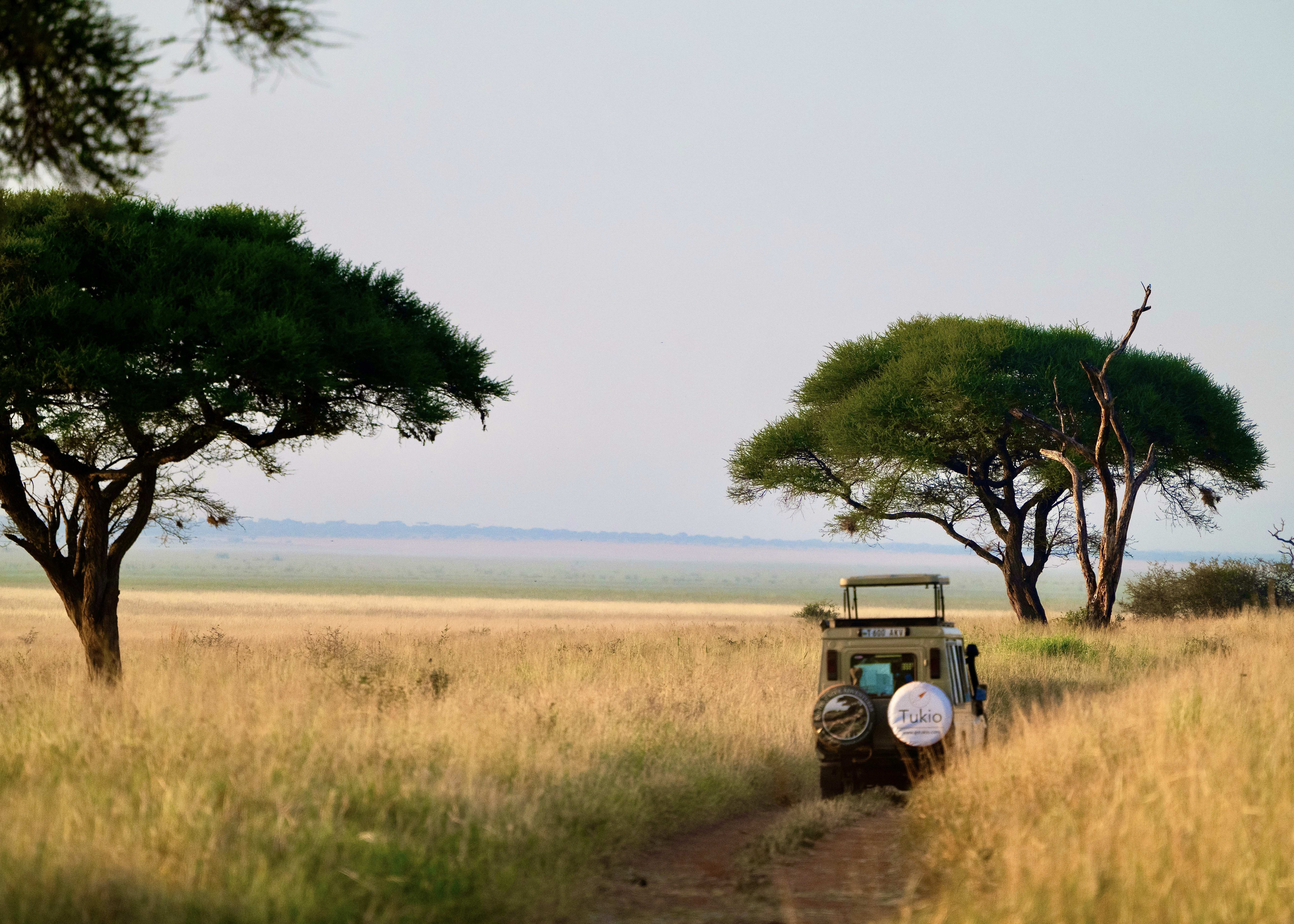
Safari has a way of capturing people's imaginations, and that's a wonderful thing, but over the years, a handful of stubborn myths have built up around it, and they're stopping a lot of people from booking the trip of a lifetime. Whether it's worries about cost, safety, or what you'll actually see out there, we're here to set the record straight.
Let's bust the 10 most common safari myths one by one.
Myth #1: "Safari is only for the ultra-rich"
The truth: Safari has a price range for almost everyone.
Yes, you can spend over $1,500 a night at an exclusive bush camp if that's your thing, but you absolutely don't have to. Kenya and Tanzania have a wide spectrum of accommodation options, from comfortable mid-range tented camps to budget-friendly shared group safaris that deliver genuinely incredible wildlife experiences without the huge price tag.
The key is planning smart, choosing the right season, and using a platform like gotukio.com where you can see exactly what you're paying for in real time. No hidden fees and mystery quotes.
Pro tip: Travelling in the shoulder season (January to March or November) often means lower prices and fewer crowds. Win-win.
Myth #2: "You need to go for at least two weeks"
The truth: Even 3 or 5 days can be transformative.
A well-planned 2 to 3 days in the Masai Mara, the Serengeti, Botswana’s Chobe National Park, or Uganda’s Bwindi Impenetrable Forest can give you more wildlife moments than you’d ever expect. Many first-time safari-goers are genuinely amazed at how much they see in just a few days: lions at sunrise, elephants at a watering hole, a leopard draped across an acacia tree, or a family of mountain gorillas moving through the mist.
That said, if you have more time, we're not going to stop you from extending the adventure.
Myth #3: "Africa is dangerous"
The truth: Kenya, Tanzania, Botswana, and Uganda are among the safest destinations for tourists in Africa.
It’s a big continent, and bundling all 54 countries together under one “danger” label just isn’t fair. Safari destinations like the Serengeti, Ngorongoro Crater, Masai Mara, Amboseli, the Okavango Delta, Chobe, Bwindi, and Queen Elizabeth National Park are well-managed, well-guarded tourist areas with highly trained guides, reliable lodges, and clear safety protocols.
Your guide will always brief you on what to do (and what not to do) around wildlife. Follow their lead and you'll be absolutely fine.
Myth #4: "You'll definitely see the Big Five"
The truth: Wildlife sightings are never guaranteed, and that's part of the magic.
This one can work both ways as a myth. Some people worry they won't see anything exciting; others expect a guaranteed checklist of every iconic animal. The reality sits somewhere in the middle.
East Africa's and southern Africa's national parks and conservancies are incredibly rich in wildlife. Sightings of lions, elephants, buffalo, leopard, and even rhino are common across Kenya, Tanzania, and Botswana, especially with an experienced guide who knows where to look. Uganda offers something different entirely: gorilla and chimpanzee treks where a sighting is practically guaranteed with the right permit, but the magic is in how close and how raw the encounter feels.
And honestly? That's what makes every game drive different. The thrill is real because nothing is scripted, and it’s also what keeps many of us coming back again and again.
Myth #5: "Safari is just sitting in a jeep all day"
The truth: Modern safaris are as active or as relaxed as you want them to be.
Sure, game drives are a big part of the experience and for good reason, but there’s a lot more on offer: guided bush walks, cultural visits to Maasai villages, hot-air balloon rides over the savannahs at dawn, boat safaris on the Chobe River in Botswana, mokoro canoe trips through the Okavango Delta, gorilla trekking in Bwindi, chimpanzee tracking in Kibale Forest - the list goes on. You can check out our activities page or find activities for each destination live when creating your itinerary on our itinerary builder.
Many lodges also offer excellent food, swimming pools, and sunset drinks in the bush. A safari day can be surprisingly full, without ever feeling exhausting.
Myth #6: "The best time to go is in July and August
The truth: Every season has something to offer.
July to September is peak season in East Africa, because of the Great Migration’s dramatic river crossings that happen in the northern Serengeti and Masai Mara during this window. In Botswana, the dry season (May to October) draws enormous concentrations of wildlife to the Chobe and Okavango waterways. Uganda’s gorilla trekking is great year-round, but drier months (June to August and December to February) make for easier hiking.
Here's a quick breakdown:
June to October (Dry Season): Best game viewing across Kenya, Tanzania & Botswana; Great Migration crossings (July to Sept); peak gorilla trekking in Uganda
January to March: Lush landscapes, newborn animals, great birdwatching; Okavango Delta starts filling; excellent value
November to May (Green Season): Lower prices, dramatic skies, fewer crowds. Avoid April and May as there are heavy rains in East Africa
The "best" time really depends on what you want to see and experience.
If you are looking specifically for the events of the Great Migration, you can read further in our dedicated article on the full circuit.
Myth #7: "Safari is not suitable for families with kids"
The truth: A well-planned family safari can be one of the most memorable experiences you share together.
Many lodges across Kenya, Tanzania, and Botswana are specifically designed with families in mind. Think private family suites, junior ranger programmes, and guides who are brilliant at engaging younger travellers. Watching a child's face light up at their first elephant sighting? Unforgettable.
Where it does apply:
Uganda's gorilla trekking requires participants to be at least 15 years old, something worth factoring in if you're travelling with younger kids.
Some lodges have minimum age requirements (typically 8-12 years old) for game drives, so it's worth checking in advance. At gotukio.com, you can filter and find family-friendly options that suit your group perfectly or ask our Safari Assistant.
Myth #8: "You have to book through a travel agent"
The truth: You can now plan and book your safari entirely online on your own terms.
The old way of booking a safari involved endless back-and-forth emails, waiting days for quotes, and comparing options that were impossible to compare. That world is now changing very quickly.
Platforms like gotukio.com let you choose your destinations, dates, group size, and budget, and get a full itinerary built for you instantly. You can tweak lodges, activities, and transport, see the real cost update in real time, and book directly. No middlemen, no mystery pricing, no waiting endlessly for quotes you don’t understand.
Myth #9: "It's always hot on safari"
The truth: Mornings and evenings in the bush can be genuinely cold.
East African and southern African national parks sit at significant elevation in many cases. The Ngorongoro Crater rim, for example, can drop to near-freezing at night. Even the Masai Mara and Serengeti get chilly before sunrise and after sunset. Botswana’s Okavango and Chobe regions can dip sharply on winter mornings (May to August). Uganda’s highland gorilla forests like Bwindi sit at over 2,300m, so a fleece and waterproofs are non-negotiable there.
This surprises a lot of first-timers who pack only shorts and t-shirts. Always bring a warm layer (a fleece or light jacket) for early morning game drives.
Myth #10: "You only need to go on safari once in your life"
The truth: Every park, every season, and every trip is genuinely different.
This one is our favorite myth to debunk, for obvious reasons. The Serengeti is not the Masai Mara. Amboseli, with Mount Kilimanjaro on the horizon, feels nothing like the dense forests of Lake Manyara. Botswana’s Okavango Delta, a vast inland oasis teeming with water-loving wildlife, is unlike anywhere else on the continent. And Uganda? Tracking mountain gorillas through Bwindi’s ancient forest is an experience so singular it barely feels like the same category of travel as a classic game drive. Even visiting the same park in a different season or conservancy feels like a completely new experience, and the wildlife action you see on one day will not be the same as the next.
Many safari travellers become repeat visitors for exactly this reason. There's always something new: a different season, a different destination, a different story.
Frequently Asked Questions About Safari
Is safari expensive?
Not necessarily. Safari has options across a wide range of budgets. Mid-range safaris in Kenya or Tanzania can cost as little as $200–$400 per person per day including accommodation, meals, and game drives. Uganda gorilla permits add a significant cost ($800 per person), but the rest of the trip can be kept lean. Botswana tends to run higher due to its low-volume, high-value tourism model — but it's genuinely worth it for the exclusivity.
How long should my first safari be?
A minimum of 5 to 7 days is recommended to get a good feel for the experience and visit multiple areas. 8 to 10 days allows for a more varied itinerary across different parks or countries. If you're combining Kenya or Tanzania with Uganda gorilla trekking, budget at least 10 to 12 days.
Do I need vaccinations for safari?
Common recommendations include yellow fever (required for Uganda and for travellers arriving from certain countries elsewhere), Hepatitis A and B, typhoid, and tetanus. Malaria prophylaxis is strongly advised for Kenya, Tanzania, and Uganda, less of a concern in drier parts of Botswana but still worth discussing with your doctor. Always consult a travel health clinic before you go.
Is it safe to go on safari?
Kenya, Tanzania, Botswana, and Uganda are all considered safe safari destinations. All reputable operators follow strict safety protocols, and your guide will brief you on wildlife safety before every drive or trek.
Can I go on safari while pregnant?
Many lodges welcome pregnant guests, but it's essential to consult your doctor beforehand. Some activities (like hot-air balloon rides or very bumpy game drives) may not be suitable depending on the stage of pregnancy. Gorilla trekking in Uganda is generally not recommended during pregnancy due to the strenuous hiking involved.
What should I pack for a safari?
Neutral-coloured clothing (khaki, olive, tan), a warm layer for mornings and evenings, comfortable closed-toe shoes, a wide-brimmed hat, sunscreen, insect repellent, binoculars, and a good camera. For Uganda's gorilla trekking, add sturdy waterproof hiking boots and long sleeves to protect against stinging nettles and insects.
Ready to Plan Your Safari?
Now that we've cleared up the myths, the only thing left to do is start planning. Whether you're drawn to the Great Migration in Kenya or Tanzania, the elephant-packed waterways of Botswana's Chobe, the mokoro glides of the Okavango Delta, or an unforgettable face-to-face with mountain gorillas in Uganda, your safari adventure is closer than you think.
At gotukio.com, you can build your perfect itinerary in minutes: choose your destinations, pick your lodges, customize your activities, and book directly online with full price transparency. No waiting, no guesswork.
Join the GoTukio Travel Club!
Receive exclusive inspiration and deals for your next trip.