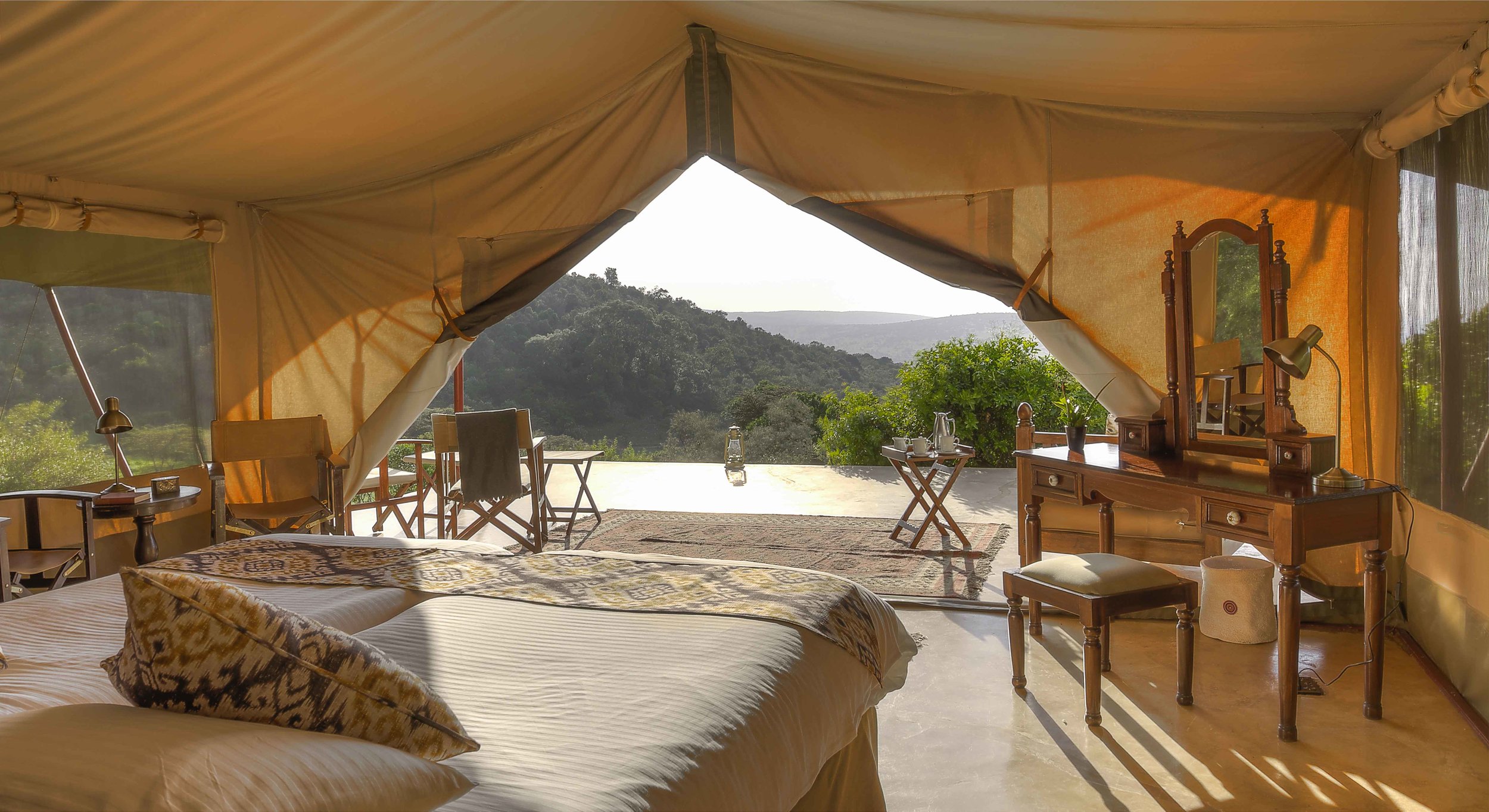
Booking a safari works differently from booking a hotel or a city break. A safari is several separate bookings that have to fit together: camps and lodges, a vehicle and driver-guide or bush flights, park and conservancy fees, permits for things like gorilla trekking, and the transfers that link them. Someone has to check that every piece is available on the same dates, price it as one trip, and confirm each part with the supplier who runs it. This guide explains every moving part, who handles it, how the money works, and how long it takes. It also covers AI agents: what they are, what they can and can’t do for a safari, and how to use them to plan and book one well.
Key Takeaways
A safari is a bundle of separate bookings: accommodation, ground transport or flights, park fees, permits, activities and transfers, all tied to the same dates.
Most camps don’t sell live availability online. Rooms are usually checked and held by an operator or platform, then confirmed in writing.
The usual sequence is: choose dates and route, check availability, get a quote, pay a deposit, receive confirmations, pay the balance, get your travel documents.
The scarcest piece decides your dates: a migration camp, a calving-season camp or a gorilla permit.
AI agents are good for research, comparison and writing a clear brief. They can’t confirm safari availability on their own, so the final booking should always come from the supplier or a booking platform.
What Are You Actually Booking When You Book a Safari?
A typical African safari has up to ten moving parts. Some you book yourself; most are booked for you by whoever puts the trip together. This table shows each one, who usually provides it, and what to check.
Moving part | Who provides it | What to check |
|---|---|---|
International flights | Airlines, booked by you or your agent | Arrival airport and time match the first transfer |
Arrival transfer and first night | Ground operator and a city hotel | Pickup time, name board, late-arrival plan |
Camps and lodges | The camp, via an operator or platform | Room type, meal plan, what activities are included |
Vehicle and driver-guide | Local ground operator | Private or shared vehicle, pop-up roof, guide’s experience |
Bush flights | Light-aircraft airlines | Airstrip matches your camp, luggage limit |
Park and conservancy fees | Park authorities, usually paid by the operator or directly at the gate | Whether fees are included and how many days are covered |
Permits | Wildlife authorities, for example gorilla and chimp permits | Permit secured before you pay the balance; reschedule rules |
Activities | Camps or specialist suppliers: balloons, walks, cultural visits | Pre-booked or paid on the spot |
Visas, eTA and vaccines | You, through official government sites | Processing times and validity dates |
Travel insurance | Your insurer | Cover starts at deposit and includes medical evacuation |
Who’s Involved in Booking a Safari?
Most safaris pass through several hands between the traveller and the bush. Knowing who does what explains why quotes for the “same” trip can differ, and why some changes take a day or two to confirm.
Camps and lodges own the rooms. Many are small, with a handful of tents, and manage availability themselves rather than through big hotel booking sites.
Local ground operators are based in Kenya, Tanzania or Uganda. They run the vehicles and guides, pay park fees, buy permits and hold rooms with the camps.
Tour operators and travel agents are often based in your home country. They design and sell the trip, then book it through a ground operator. Our guide to what safari travel agents charge explains how they’re paid.
Booking platforms let you build and compare itineraries online, then connect you with operators who confirm them. See Safari Booking Platforms 2027 for how they compare.
Park and wildlife authorities set park fees and issue permits. They don’t sell holidays, but their rules shape every itinerary.
Camps typically publish one rate for the public and give operators a separate trade rate. Operators then add the vehicle, guide, fees and their margin. That’s why the same camp on the same night can appear at different prices from different sellers, and why it pays to compare what each quote actually includes.
How Booking a Safari Works, Step by Step
Whether you book through an agent, a local operator or a platform, the process follows the same order.
Choose when and where. Season drives everything: where the herds are, what it costs and how busy it gets. If you haven’t chosen a country, start with Kenya vs Tanzania.
Set your trip length and style. Number of nights, budget level, private or shared vehicle, and whether you’ll fly or drive between parks.
Build the route. Pick parks or conservancies, a camp in each, and the number of nights. Two or three nights per area is a good rule.
Check availability and place holds. The operator or platform asks each camp for your dates. Rooms can often be held provisionally for a few days while you decide.
Get a quote. It should list every camp, night, transfer, flight and fee, and say clearly what’s included and what isn’t.
Confirm and pay a deposit. Paying the deposit turns provisional holds into confirmed bookings. This is also when to buy travel insurance.
Receive supplier confirmations and permits. Each camp confirms, flights are ticketed and permits are bought in your name.
Pay the balance. Usually due a set number of weeks before travel, as stated in your booking terms.
Get your travel documents. A final itinerary, vouchers, emergency contacts, packing advice and flight luggage rules.
Travel. Your driver-guide or transfer meets you on arrival, and the operator handles anything that changes on the ground.
What’s Usually Included in a Safari, and What Isn’t?
Inclusions vary by camp and seller, so compare quotes line by line. As a general guide:
Usually included | Often extra |
|---|---|
Accommodation and most meals at safari camps | International flights |
Game drives in a shared or private vehicle | Visas and the Kenya eTA |
Driver-guide or camp guides | Tips for guides and camp staff |
Park and conservancy fees (check the quote) | Premium drinks and spa treatments |
Road transfers between parks | Balloon flights and some specialist activities |
Bush flights, if they’re part of the itinerary | Gorilla or chimp permits, unless listed |
Drinking water in the vehicle | Travel insurance |
Tipping is customary on safari and rarely included. Our Kenya tipping guide covers who to tip and how.
How Do Deposits, Payments and Cancellations Work?
Most safaris are paid in two stages: a deposit to confirm, and the balance some weeks before you travel. The deposit secures rooms that the camp would otherwise sell to someone else, which is why it’s rarely fully refundable.
Cancellation charges usually rise as the travel date gets closer. Read the cancellation schedule before you pay the deposit.
Some items can’t be refunded at all, such as certain permits and flights. Ask which parts of your trip are non-refundable.
Buy travel insurance when you pay the deposit, so cancellation cover starts straight away.
Check who holds your money and how it’s protected. Ask whether the company is licensed and how customer payments are safeguarded. Our guide on how to tell if a safari operator is legit lists what to check.
How Long Does It Take to Book a Safari?
Traditionally, booking a safari takes weeks of emails: you contact several operators, wait for each to check availability, compare quotes that are laid out differently, then go back and forth on changes. On a platform where you build the itinerary yourself and see what’s available, the same process can take a couple of minutes, once you know what you are looking for.
How far ahead you book matters more than how long the booking takes. Migration-season camps and gorilla permits sell out months in advance. See How Far in Advance Should You Book a Safari? for lead times by season and country.
What Are the Ways to Book a Safari?
Booking route | How it works | Best for |
|---|---|---|
Directly with a camp | You book rooms; you arrange transport, fees and flights yourself | Single-camp stays, experienced travellers |
Local ground operator | One operator plans, books and runs the whole trip | Travellers comfortable dealing with a company abroad |
Travel agent or tour operator at home | They design and sell the trip, then book it through a local operator | People who want one point of contact in their own country |
Booking platform | You build and compare itineraries online; vetted operators confirm and run them | Travellers who want to see options and control the details |
We compare these in more depth in What’s the Best Way to Book a Safari?, and explain the DIY route in How to Book a Safari Without a Travel Agent.
Can AI Agents Book a Safari? How They Work and How to Use Them
More travellers now start planning with AI assistants such as ChatGPT, Claude, Gemini or Perplexity. Used well, they save hours of research. Used carelessly, they can give you out-of-date information with complete confidence. Here’s how they work and where they fit in booking a safari.
What is an AI agent?
An AI agent is an AI assistant that can take actions, not just answer questions. Beyond chatting, it can search the web, open and read pages, use apps you’ve connected, fill in forms and, on some services, complete a booking. Several general assistants and travel companies are now adding booking features for flights and hotels.
How do AI agents work?
Underneath is a large language model that has learned patterns from a huge amount of text. When you give it a task, the agent breaks it into steps, decides which tool to use for each one (a web search, a website, a connected app), reads the results and writes an answer. Two things follow from this. First, an agent is only as good as the sources it can reach: if a camp’s live availability isn’t online, the agent can’t see it. Second, when it can’t find something, a language model may fill the gap with a plausible guess, so any specific fact it gives you should come with a source you can check.
What AI agents are good at for a safari
Explaining seasons, parks and the differences between countries
Turning a vague idea into a structured route with nights per area
Shortlisting camps by style, location and the experience you want
Explaining park fees, permit rules and entry requirements, with links to official sources
Comparing quotes line by line and spotting what one includes and another doesn’t
Writing a clear enquiry or brief to send to an operator or platform
Building packing lists and pre-departure checklists
Where AI agents fall short for safaris
Live availability. Many safari camps aren’t sold on big hotel booking sites, so an agent usually can’t see whether a tent is free on your dates.
Current prices. Rates change by season and seller. Treat any price an AI gives you as a rough guide, not a quote.
Permits and multi-supplier trips. Gorilla permits, conservancy access and the timing between camps, flights and transfers still need a person or platform to secure and coordinate them.
Vetting operators. An agent can summarise reviews, but it can’t vouch that a company is licensed or financially sound.
Changes on the ground. If a flight time moves or a road floods, you need an operator who can act, not a chat window.
How to use an AI agent to book a safari effectively
Give it a complete brief. Dates or month, number of nights, who’s travelling (including children’s ages), budget level, the experiences that matter most, and anything to avoid.
Ask for sources and dates. For any fact you’ll rely on, such as a fee, a rule or a season, ask where it comes from and when it was last updated.
Ask it to list its assumptions. This surfaces guesses, such as assuming a camp is open in April when many close for the rains.
Use it to shortlist, not to confirm. Take the shortlist to a platform or operator that can check real availability.
Compare quotes with it. Paste in two quotes and ask what each includes, what’s missing, and what questions to ask.
Keep payments and passports out of the chat. Only enter card or passport details on the official checkout page of the company you’re booking with.
Get the final confirmation in writing from the supplier or platform. Not from the AI.
A prompt you can copy
“I’m planning a safari in [month and year] for [number] people, [ages if children]. We have [number] nights on the ground and a [budget level] budget. Our priorities are [for example: the migration, big cats, walking safaris, gorillas]. We’d rather avoid [for example: long drives, crowded parks]. Suggest two routes in [Kenya / Tanzania / Uganda] with nights per area and the type of camp in each. For every fact about seasons, fees or permits, give a source and say how current it is. List any assumptions you’ve made, and tell me what I need to check with an operator before booking.”
Using AI and Gotukio together
A good way to work is to use an AI assistant to shape the idea, then build the actual trip in Gotukio’s trip planner. You choose the parks, camps, nights and activities, see what fits your dates, and the itinerary is matched with vetted local operators who confirm it. The AI does the thinking; the platform does the checking and booking.
Common Mistakes When Booking a Safari
Booking international flights before the camps are confirmed. If the camp is full, you’re left with flights to dates that don’t work.
Comparing quotes on the headline price only. Check park fees, transfers, flights and meal plans.
Not asking what’s refundable. Permits and some flights often aren’t.
Leaving insurance until just before travel. Cancellation cover should start when you pay the deposit.
Treating an AI’s answer as a confirmed booking or price. Check availability and prices with the supplier.
Booking too many places for the number of nights. Less time travelling means more time watching wildlife.
More pitfalls are covered in 8 Mistakes People Make When Booking an African Safari.
Booking a Safari: FAQ
How does booking a safari work?
You choose your dates and route, an operator or platform checks availability with each camp and supplier, you receive a quote, pay a deposit to confirm, then pay the balance before travel and receive your travel documents.
How far in advance should I book a safari?
Usually 3 to 6 months ahead, and further for migration season or holiday dates. Green-season trips can often be booked a few weeks out.
Do I need a travel agent to book a safari?
No. You can book through a local operator, a booking platform or directly with camps. An agent is useful if you want one point of contact in your own country.
Can an AI agent book a safari for me?
Not end to end yet. AI agents are useful for research, planning, comparing quotes and writing a brief, but most safari camps don’t offer live online availability, and permits and transfers need coordinating. Use AI to plan, then book through a supplier or platform that confirms in writing.
Is it safe to book a safari online?
Yes, if you book with a licensed company, pay through its official checkout, get written confirmations for every part of the trip, and buy travel insurance when you pay the deposit.
Are park fees included in a safari price?
Often, but not always. Check that your quote lists park and conservancy fees and covers every day you’ll spend in each park.
Can I change my safari after booking?
Usually, subject to availability and the supplier’s terms. Changes close to the travel date may carry charges, and some items, like certain permits, can’t be moved.
What to Read or Do Next
If you’re still choosing a country, read Kenya vs Tanzania Safari 2027.
If you’re starting from zero, read How to Plan a Safari Trip in Africa from Scratch.
If you’re planning gorillas, read our 14 most asked gorilla trekking questions.
Before you travel, check East Africa entry requirements.
Ready to book? Build your safari at gotukio.com: choose your parks, camps and nights, and have your trip confirmed by vetted local operators.
Read More
Join the GoTukio Travel Club!
Receive exclusive inspiration and deals for your next trip.