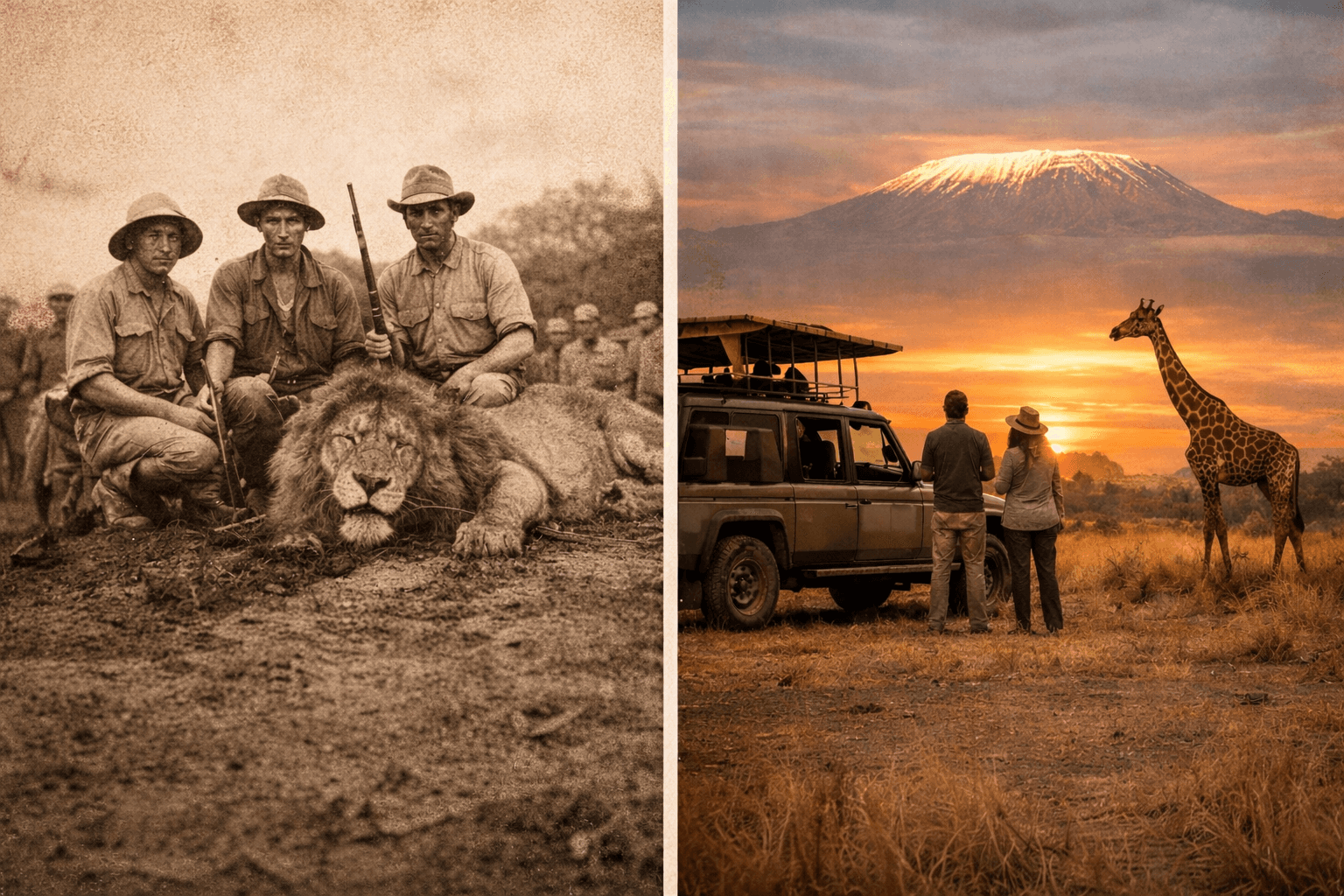
What began as colonial hunting expeditions has evolved into a modern industry centered on conservation, community, and immersive wildlife encounters.
Understanding the history of safari helps travelers appreciate not just where the experience comes from, but why modern safaris are designed the way they are today.
How, where and when did safaris originate?
The word safari comes from the Swahili word that means “journey.” Long before tourism, safaris were practical expeditions for trade, exploration, and survival.
In the late 19th and early 20th centuries, during the colonial era, safari took on a very different meaning. European colonists and aristocrats traveled to East and Southern Africa for big game hunting, often pursuing lions, elephants, rhinos, and buffalo.
These early safaris were logistical operations involving:
Large caravans of porters
Local trackers and guides
Months-long journeys into remote regions
The goal was trophies, not photography.
Where did the modern Gin & Tonic safari sundowner come from?
Some safari traditions still exist today, even if their original purpose has changed.
The iconic gin and tonic sundowner traces back to colonial times. Quinine, which is a potent, natural alkaloid derived from cinchona bark, was primarily used as a prescription medication for treating chloroquine-resistant malaria, and was extremely bitter. British colonists mixed it with tonic water, gin, sugar, and lime to make it palatable.
Drinking it at sunset became a ritual, marking the end of a long day in the bush and avoiding mosquitoes at dusk. What began as medicine is now one of safari’s most romantic traditions.
When did safaris shift away from hunting?
By the mid-20th century, wildlife populations were declining rapidly. Overhunting, habitat loss, and lack of regulation led to the realization that safari as it existed was unsustainable.
This period marked a turning point:
National parks and protected areas were established
Hunting regulations tightened
Wildlife photography began replacing trophies
Kenya banned hunting entirely in 1977, accelerating the transition to photographic safaris.
The Rise of the Modern Safari
Modern safaris focus on observation, conservation, and experience rather than extraction.
Today’s safaris typically include:
Game drives led by trained driver-guides
Purpose-built safari vehicles
Lodges and camps designed to blend into the environment
Experiences like walking safaris, night drives, and cultural visits
Photography replaced rifles, and storytelling replaced trophies.
Conservation and Community at the Core
The most important evolution of safari is its role in conservation.
Responsible safari tourism now:
Funds wildlife protection and anti-poaching efforts
Supports local communities through employment and education
Protects vast ecosystems that would otherwise be lost
Community conservancies in Kenya, Tanzania, Botswana, and Uganda are prime examples of tourism directly protecting land and wildlife.
Safari Today: A Different Kind of Luxury
Luxury in safari today isn’t excess, it’s access.
It’s watching elephants cross a river at dawn. It’s listening to lions from your tent at night. It’s learning from guides whose knowledge is passed down through generations.
Modern safaris offer comfort, but the magic remains the same: being deeply connected to nature.
Why This History Matters
Knowing where safari comes from helps travelers make better choices today and appreciate the origins of this unique experience. Choosing operators, lodges, and experiences that respect wildlife and communities offers travelers the opportunity to give back to what makes these experiences possible and ensure they are available to the generations to come.
Safari has evolved from conquest to conservation, and today, travelers play a role in shaping its future.
Planning a safari? Choose experiences that honor the land, the wildlife, and the people who make it possible. At Gotukio.com we help make it possible.
Join the GoTukio Travel Club!
Receive exclusive inspiration and deals for your next trip.