In this guide we break down the areas of the Serengeti, and how to design your trip based on when you are going and what you are looking for.

When most people think of the Serengeti, they picture a single sweeping landscape of golden grass and distant acacia trees. That image isn't wrong, but it's only part of the story.
The Serengeti National Park covers roughly 14,750 square kilometres. That's bigger than Northern Ireland. The landscape, the wildlife, and the experience shift dramatically depending on where you are in the park and on what time of year you visit.
Book the wrong area for your travel dates, and you might miss the Great Migration entirely. Book the right one, and you could be standing 10 metres from a river crossing that'll stay with you for the rest of your life.
This guide breaks the Serengeti down zone by zone, explaining what each is best for, and highlighting our favourite lodges in each area. We'll also cover migration camps, a game-changing concept that a lot of travellers don't know about until it's too late to book one.
Let's get into it.
Quick Overview: The Main Areas of the Serengeti
Area | Best For | Peak Timing |
Seronera (Central) | Year-round wildlife, predators, first-timers | Year-round |
Ndutu & Southern Plains | Calving season, predator action | January to March |
Western Corridor (Grumeti) | Grumeti River crossings, fewer crowds | June and July |
Northern Serengeti (Kogatende) | Mara River crossings, peak migration drama | July to October |
Moru Kopjes (South Central) | Black rhino, granite landscapes, seclusion | Year-round |
What Are Migration Camps and Why Should You Care?
Here's something a lot of first-time safari planners miss: migration camps.
Unlike permanent lodges that sit in a fixed location year-round, migration camps are semi-permanent tented camps that are designed to move. They pack up, relocate, and redeploy in the path of the herds twice a year, spending calving season in the south, then heading north for the river crossing months.
The trade-off is that these camps offer a more rustic, expedition-style experience. You won't find infinity pools or marble bathrooms. What you will find is a proper canvas tent, outstanding guiding, and the knowledge that when you step outside, the action is right there.
When booking with Tukio, you choose a migration camp for the Serengeti part of your itinerary, and depending on the season, it will be located at the corresponding part of the park.
1. Seronera & the Central Serengeti
Best for: Year-round wildlife, predators, iconic Serengeti landscapes, first-time visitors
When to visit: Any time of year
If you've ever googled "Serengeti safari," the images you saw were almost certainly from Seronera.
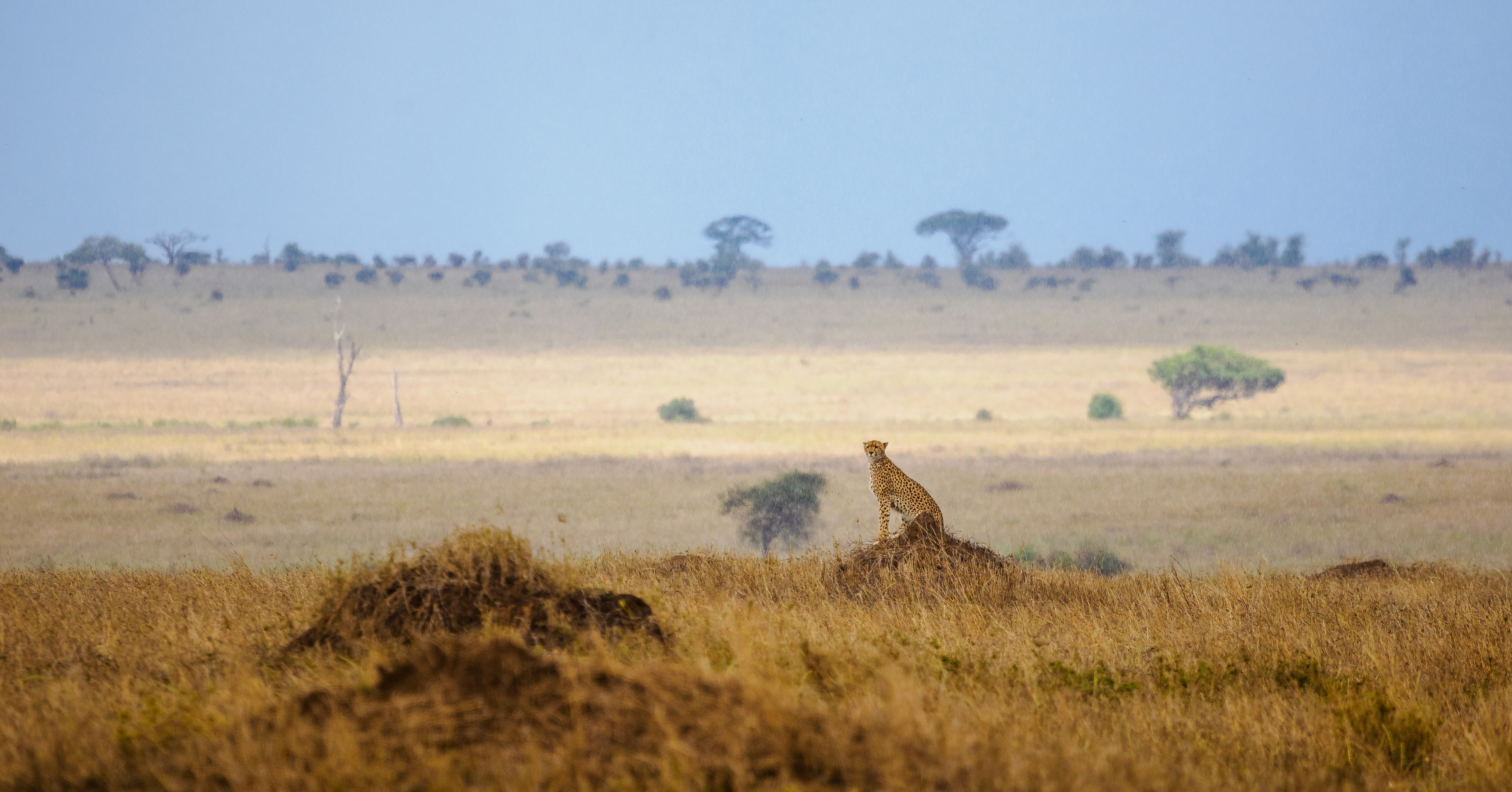
The Central Serengeti is the heart of the park, built around the Seronera River valley, a permanent water source that makes it a magnet for wildlife all year round. Lions are resident and regularly sighted. Leopards use the river's fig trees as their private dining room. Cheetah stalk the open grasslands and elephants come and go. During the dry months, the concentration of animals around the valley's waterholes is extraordinary.
Seronera is also the most accessible area in the park, typically a 45-minute light aircraft flight from Arusha or 3 hour drive from Ngorongoro Crater, and it has the widest range of lodges, from budget tented camps to five-star luxury. On the flipside, it's the busiest area, especially July through October and multiple vehicles at a single sighting aren't uncommon.
That said, for first-timers and those combining the Serengeti with other stops on a Tanzania Northern Circuit itinerary, Seronera is a very natural base.
Where to Stay in Seronera
Four Seasons Serengeti Luxury If you want the full five-star treatment without sacrificing any of the wildlife experience, this is it. Stunning infinity pool, exceptional food, and excellent game drive access from a prime central position. Not cheap — but genuinely special.
Acacia Seronera Luxury Camp Luxury A newer addition to the Seronera scene that has quickly established itself as one of the best options in the area. Excellent service and great game drive circuits.
Serengeti Serena Mid-Range One of the best value mid-range options in the central Serengeti. Architecturally striking, centrally located, and consistently delivers on game drives. A great choice for families.
Serengeti Sametu Camp Mid-Range Positioned near the Sametu kopjes, this is a good option for those wanting a quieter mid-range experience slightly away from the main Seronera hub.
Embalakai Camp Serengeti Mid-Range A well-regarded camp with good guiding and comfortable tented accommodation. Reliable and consistently well-reviewed.
Kananga Tented Camp Tented Camp A no-frills tented camp experience that keeps it authentic. Good for budget-conscious travellers who want to prioritise time in the field over lodge facilities.
Tukaone Camps Tented Camp A genuinely affordable tented camp experience in the Seronera area. Simple, friendly, and focused on the safari itself.
2. Ndutu & the Southern Plains
Best for: Calving season, predator action, big skies, photography
When to visit: December to March
Head south from Seronera and the landscape opens up into something extraordinary. The short-grass plains of Ndutu, which technically sit in the Ngorongoro Conservation Area, on the park's southern edge, is where the Great Migration comes to give birth.
Between roughly December and March, up to 500,000 wildebeest calves are born here in a matter of weeks. It's one of nature's great spectacles. The plains are carpeted with young animals taking their first steps, and every predator in the area knows it: lions, cheetahs, hyenas, leopards and wild dogs all converge for what is effectively one long feast.
The hunting action here during calving season is some of the most intense and relentless you'll see anywhere in Africa. And the wide, flat terrain means visibility is incredible. It's no coincidence that Ndutu is one of the most photographed places on the continent.
Where to Stay Near Ndutu
The Ndutu area is prime territory for migration camps during the calving season.
Nyikani Migration Camp Migration Camp One of the most highly regarded migration camps operating in the ecosystem. Nyikani deploys in the southern Serengeti and Ndutu during calving season, positioning guests right in the action with excellent, experienced guiding. Moves north for the river crossing season. Contact us at gotukio.com to book.
Zebra Migration Camp Migration Camp A small, exclusive and genuinely intimate camp that's all about the wildlife experience. The team track the herds closely and reposition accordingly, so you're never chasing the migration, you're already in it. Contact us at gotukio.com to book.
Serengeti Woodlands Camp Migration Camp Combining authentic Tanzanian hospitality with outstanding guiding and smart positioning within the migration route. A warmer, more personal feel than some of the larger operators. Contact us at gotukio.com to book.
3. Moru Kopjes & the South Central Serengeti
Best for: Unique granite landscapes, black rhino, seclusion, off-the-beaten-track experience When to visit: Year-round
South and west of Seronera, the landscape shifts again. The Moru Kopjes area is defined by dramatic granite outcrops and ancient rocky islands rising from the plains that give this part of the Serengeti a completely different character.
This is excellent leopard country (they love the kopjes as vantage points and cover), and it's also one of the few places in the Serengeti ecosystem where black rhino have been successfully reintroduced. If rhino tracking is on your bucket list, the Moru area is where to go.
It's also significantly less visited than Seronera, which means a much quieter game drive experience. Add in the Maasai rock paintings dotted around the kopjes and the hippo pools of the Mbalageti River, and you've got a compelling alternative to the main hubs.
Where to Stay Near Moru Kopjes
Asanja Moru Mid-Range Beautifully positioned among the kopjes, Asanja Moru offers a genuinely off-grid feel. The rhino tracking programme here is outstanding — if that's a priority, this is the camp. Remote, authentic, and excellent value.
Ole Serai Luxury Camp Moru Kopjes Luxury Ole Serai brings their signature quality to this spectacular kopje setting. If you want the wild south with full luxury comforts, this is the one.
4. Western Corridor
Best for: Grumeti River crossings, genuine wilderness, buffalo, birding, fewer crowds
When to visit: June and July for crossings; year-round for the wilderness experience
The western Serengeti is Africa's best kept safari secret. Far fewer visitors make it out here, which means you often have the bush to yourself, even during peak season.
The Grumeti River cuts through the western corridor, and in June and July, the Great Migration passes through on its way north. The Grumeti River crossings are every bit as dramatic as the famous Mara crossings further north, but with a fraction of the audience. Giant Nile crocodiles have been growing in these waters for decades, and they know exactly when the herds are coming.
The Ikoma area, on the park's western boundary, is even more off the beaten track. Buffalo herds in the thousands roam this part of the park. The birding is exceptional. And there's a rawness to the landscape that's increasingly hard to find in the more popular areas.
Where to Stay in the Western Corridor & Ikoma
Escarpment Serengeti Luxury One of the most dramatic lodge settings in the entire Serengeti perched on an escarpment with sweeping views across the western plains. High-end, beautifully designed and genuinely remote. A serious bucket-list property.
Ikoma Wild Camp Tented Camp Does exactly what it says. Wild, honest, unfussy safari at its most authentic. Good guiding, comfortable tented accommodation and the sounds of Africa at full volume every night. Great value.
5. Northern Serengeti (Kogatende)
Best for: Mara River crossings, the peak of the Great Migration
When to visit: July to October
If you've seen footage of thousands of wildebeest throwing themselves into a river while enormous crocodiles thrash through the chaos, that's in the Northern Serengeti, where Tanzania borders Kenya.
The northern Serengeti is remote, wild and underdeveloped compared to the central zones. There are relatively few lodges here, and the landscape has a rawer, less manicured feel. From July to October, the Great Migration pushes north through this area and must cross the Mara River multiple times before entering Kenya's Masai Mara.
The crossings are genuinely one of the most dramatic wildlife events on Earth. Thousands of animals pace the bank, working up the courage (or the panic) to enter the water. When they go, they go all at once. The noise is extraordinary, crocodiles come from nowhere, animals lose their footing and some don't make it. It's wild, it's brutal, it's heartbreaking and it's breathtaking, all at the same time.
Because the area is less visited, you'll typically have far fewer vehicles at a crossing than you'd see on the Kenyan side of the Mara. That makes an enormous difference to the experience.
Note that Kogatende is a good 3 hour drive from Seronera, so if you want to make it directly to the northern Serengeti, you might want to opt for a flight, or do a stop over night in the central Serengeti to break the trip.
Where to Stay in Kogatende
Ole Serai Kogatende Mid-Range The best-value option in the northern Serengeti, and reliably well-run. Ole Serai's track record in Tanzania is excellent, and this property gives you direct access to the prime Mara River crossing points without the luxury price tag. Book early — northern Serengeti camps fill up fast.
Nyikani Migration Camp Migration Camp After covering calving season in the south, Nyikani relocates north for the river crossing season. Being in a migration camp for the Mara crossings is something else, the small size means you can move quickly when the herds start pacing the bank.
Zebra Migration Camp Migration Camp This small, exclusive camp also deploys in the north during peak crossing season. Intimate, fast-moving, and laser-focused on putting you in the right place.
Mara River Camp Migration Camp Karibu Camps’ northern deployment gives guests the same warmth and guiding excellence in the most dramatic setting the Serengeti has to offer.
Ask our team for bookings at the Migration Camps that are not yet available directly on the platform.
So, Which Area Should You Choose?
Here's the short version:
Going in January or February? Head south to Ndutu for calving season. Consider a migration camp for the full experience.
Going in June or July? The western corridor is massively underrated. Grumeti crossings with nobody else around.
Going July through October? Northern Serengeti (Kogatende) for the Mara River crossings. Book well in advance.
Going any other time, or on your first safari? Seronera. Year-round wildlife, excellent lodges at every price point, and classic Serengeti landscapes.
Want something different and off the beaten track? Moru Kopjes or the western Ikoma area. Fewer vehicles, unique landscapes, a more immersive experience.
Of course, if you have more than 4 or 5 days in the Serengeti, you don't have to choose just one zone. Combining two areas, say, Seronera with a couple of nights in Kogatende during migration season, is one of the most effective ways to make the most of the park.
Ask our team to build you an itinerary with more than 2 lodges in the same park if you wish to experience more than one area.
Frequently Asked Questions
What are the different areas of the Serengeti?
The Serengeti can be divided into five main areas: the Central Serengeti (Seronera), the Southern Plains (Ndutu), the South Central zone around the Moru Kopjes, the Western Corridor (Grumeti), and the Northern Serengeti (Kogatende). Each offers a different landscape and wildlife experience.
Which part of the Serengeti is best for the Great Migration?
It depends on the season. The southern Serengeti and Ndutu area is best from January to March for calving season. The western corridor and Grumeti River see crossings in June and July. The northern Serengeti around Kogatende is where the famous Mara River crossings happen between July and October.
What is a migration camp and how does it work?
A migration camp is a semi-permanent tented camp that physically moves location throughout the year to follow the Great Migration. Rather than staying in one place and hoping the herds come to you, migration camps reposition twice a year, spending calving season on the southern plains, then moving north for the river crossing season. They offer a more rustic, expedition-style experience than permanent lodges.
Is the Serengeti good year-round?
Yes, especially the central Serengeti. The Seronera area has permanent water and resident wildlife, meaning excellent game viewing throughout the year. Different zones are better at different times depending on the migration, but there's genuinely no bad time to visit.
How many days do I need in the Serengeti?
A minimum of 2 nights gives you a flavour, but 4 to 6 nights lets you properly explore the park and dramatically increases your chances of witnessing migration events. If you're combining multiple zones, plan for 5 nights or more.
What is the best lodge in the Serengeti?
That depends on your budget and what you're looking for. For pure luxury, the Four Seasons Serengeti and Anantya Luxury Camp are hard to beat. For the best mid-range value, Ole Serai and Serengeti Serena are consistently excellent. For a truly off-grid experience, consider Asanja Moru or Ikoma Wild Camp.
Browse all our Serengeti lodges at gotukio.com/destinations/serengeti.
Join the GoTukio Travel Club!
Receive exclusive inspiration and deals for your next trip.