If the Serengeti is Africa’s greatest wildlife spectacle, the Okavango Delta is its greatest wonder. A river that flows inland and disappears into the Kalahari Desert, creating a sprawling oasis of lagoons, palm islands, and floodplains teeming with wildlife. It shouldn’t exist, and yet it does and it’s extraordinary.
For first-time visitors to Africa, the Delta can feel a little overwhelming to plan. Which area is right for you? When should you go? Is it worth the price tag? We break it all down below.
What Makes the Okavango Delta Special?
Most safari destinations are about game drives. The Okavango is about water. You explore by mokoro (a traditional dugout canoe), by small motorboat, on foot, and by game drive too. The combination of ecosystems packed into one place means the wildlife variety is staggering: elephants wading through lily-covered channels, hippos yawning in the shallows, lions lazing on termite mounds, leopards draping themselves over fig trees, and wild dogs, which is one of Africa’s most endangered predators, denning in the dry woodland fringes.
The Okavango Delta is one of the most exclusive safari destinations on the continent. The Botswana government has long pursued a “high-value, low-impact” tourism model, which means fewer visitors, stricter rules, and yes, higher prices. This is precisely what keeps it so special.
The Areas of the Okavango Delta
The Delta is large, roughly the size of Switzerland, and split into distinct zones, each with a different character and different wildlife. Where you stay makes a big difference to what you experience.
The Permanent Delta (Northern & Central Okavango)
This is the iconic Okavango most people picture: deep channels, papyrus-lined waterways, and flooded islands. Water is present here year-round, which means mokoro trips and boat activities are always on the cards. The wildlife is exceptional, particularly elephants, buffalo, lion, leopard, and an extraordinary variety of water birds.
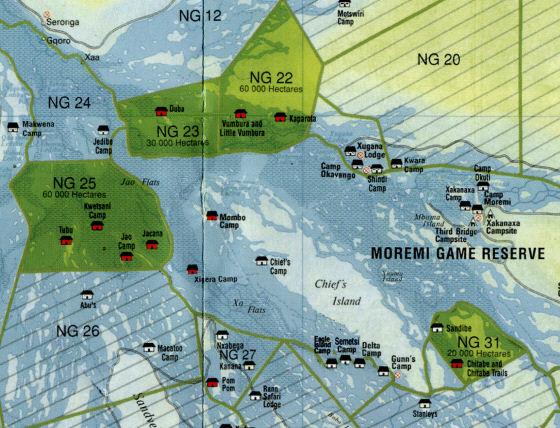
Key areas here include Chiefs Island (arguably the best game-viewing zone in the entire Delta), the Moremi Game Reserve (the only formally protected section of the Delta), and the remote lagoons of the Jao and Kwedi Concessions.
This is the most sought-after part of the Delta and where you'll find many of the region's most celebrated camps.
Best for: First-timers wanting the full water and wildlife experience.
The Eastern Panhandle
The Panhandle is where the Okavango River first enters Botswana before fanning out into the Delta proper. It's narrower, more river-like, and feels quite different from the flooded islands further south. The Panhandle is famous for its fishing, particularly tigerfish and bream, and for extraordinary bird life, including the African skimmer and slaty egret.
Wildlife is present but generally less dense than the permanent Delta. It's a quieter, more off-the-beaten-path experience.
Best for: Keen birdwatchers, fly fishers, and travellers looking for something a little different.
The Seasonal Floodplains (Khwai & Southern Okavango)
The southern and eastern fringes of the Delta are drier and more savannah-like, with game drives taking centre stage. The Khwai Community Concession is a particular highlight. It’s a vast private wildlife area bordering Moremi, run by the local Khwai community, with exceptional predator sightings and a more affordable (by Okavango standards) range of accommodation options.
The seasonal floodplains flood in the dry season (July to October), creating dramatic game-viewing conditions as wildlife concentrates around receding water.
Best for: Classic game-drive safari fans, those on a more flexible budget, and travellers combining the Delta with Chobe National Park.
When to Go: The Okavango Seasons Explained
The Okavango works on a counter-intuitive seasonal rhythm. The flood arrives during the dry season, water from Angola's summer rains takes months to reach the Delta, arriving between June and August. This means the best time to visit is actually Botswana's dry, cool winter.
Peak Season: June to October
This is when the Delta is at its most spectacular. The annual flood is in full swing, channels are navigable, and wildlife concentrates around the water. Temperatures are cooler (cold at night so pack a fleece), skies are clear, and game viewing is exceptional.
July and August in particular are extraordinary months. Expect incredible predator activity, huge elephant herds, and some of the best mokoro and boat experiences of the year.
The catch: This is also the most expensive and most popular time to visit. Lodges fill up fast so book 9 to 12 months in advance if you're set on peak months.
Shoulder Season: May & November
May marks the tail end of the green season and the very start of the flood's arrival. It can still be warm and occasionally rainy, but wildlife is good and lodges are beginning to fill for the incoming peak season. Prices are slightly lower than July to August.
November is the transition into the green season which has hotter, more unpredictable weather, but stunning lush landscapes and excellent birdwatching (migratory species begin arriving). It's what we call the "secret season": fewer crowds, better rates, and the Delta looking absolutely gorgeous.
Best for: Travellers who want great value without sacrificing too much on the experience.
Green Season: December to April
The Okavango's rainy season brings dramatic skies, lush vegetation, and a baby boom as many animals give birth during this period, which means incredible predator-prey interactions and adorable newborns everywhere you look.
The Delta itself is drier during this period (the flood hasn't arrived yet), which limits water-based activities, and some remote camps close for renovation in March and April. Temperatures are hot and humid.
Best for: Budget-conscious travellers, keen birders, and those who don't mind the heat in exchange for a more exclusive experience.
Where to Stay in the Okavango Delta
The Delta is almost entirely made up of private concessions and camps, ranging from ultra-luxury to intimate tented camps. Unlike the Serengeti or Masai Mara, there are no large hotel-style properties. Accommodation is typically small (6–12 units), which is precisely what makes it so special.
Here are the properties we have available on Tukio:
Shinde Okavango Shinde Concession | Luxury Lodge
One of the original camps in Botswana and still one of the best. Shinde sits on a lush palm island on the edge of the Shinde Lagoon in the northern Delta, an area absolutely teeming with wildlife and birds. Think elegant tented suites, expert guiding, and a combination of game drives, mokoro trips, and walking safaris. This is the classic Okavango experience done at the highest level.
Best for: First-timers wanting the full luxury Delta experience. Peak season is when this camp really shines.
Wilderness Pelo Chief's Island | Tented Camp
Chief's Island is the largest island in the Okavango Delta and sits within the Moremi Game Reserve, widely regarded as one of the finest wildlife areas on the continent. Wilderness Pelo offers an intimate tented camp experience right in the heart of it, with exceptional game viewing and the full range of water-based and land activities. If you want to be in the deepest, wildest part of the Delta, this is your camp.
Best for: Wildlife enthusiasts and those who want to be immersed in the most biodiverse zone of the Delta.
Moremi Crossing Moremi Game Reserve | Tented Camp
Positioned at the eastern edge of the Moremi Game Reserve, Moremi Crossing sits on the banks of the Khwai River, a spectacular wildlife corridor. The camp offers excellent game drives into Moremi as well as mokoro and boat activities, making it a brilliant all-rounder. It's also a great base for combining the Delta with Chobe National Park, just a short transfer away.
Best for: Travellers wanting a combination of water activities and classic game drives, and those on a Botswana circuit including Chobe.
Okuti Xudum Concession | Luxury Lodge
Okuti sits within the private Xudum Concession in the southern Okavango, bordering Moremi. It's a beautiful luxury lodge offering exclusive access to its concession, meaning fewer vehicles and more private wildlife encounters. The Xudum area is known for exceptional big cat sightings, particularly lions and leopards, alongside large elephant herds.
Best for: Couples and those seeking a more exclusive, private setting within the broader Delta ecosystem.
Quick-Fire Questions
Is the Okavango Delta worth the cost? Yes. if you go in with the right expectations. It's expensive because access is limited, camps are small, and the government deliberately restricts visitor numbers. You're paying for exclusivity, exceptional guiding, and a wilderness experience unlike anywhere else.
How long should I spend in the Delta? A minimum of 3 nights, but 4 to 5 nights is ideal. The rhythm of camp life, early morning game drive, mokoro in the afternoon, sundowners by the water, takes a day to settle into, and you'll want time to actually savour it.
Can I combine the Okavango with other destinations? Absolutely. The most popular combination is Okavango Delta + Chobe National Park, which gives you the water-based wilderness of the Delta and the elephant-packed floodplains of Chobe in one trip. Victoria Falls is also a short hop away and makes for a perfect end to a Southern Africa itinerary.
Do I need to fly in? Almost certainly yes. The remote camps of the Delta are only accessible by small charter plane from Maun. The flights are part of the adventure, low-altitude, 20-minute hops over the floodplains that give you your first jaw-dropping view of the Delta from above.
Our Take
The Okavango Delta isn't the easiest destination to plan, and that's exactly why it stays so wild, so uncrowded, and so genuinely awe-inspiring. For a first visit to Africa, it's one of those experiences that recalibrates what you think a wildlife encounter can be.
If you want help putting together an Okavango itinerary, whether it's a standalone Delta trip or part of a bigger Southern Africa adventure, get started with Tukio and we'll build something brilliant.
Have questions about the Okavango Delta? Drop us a message or book a call with the Tukio team. We've been there, and we love talking about it.
Join the GoTukio Travel Club!
Receive exclusive inspiration and deals for your next trip.